
Carbon project no. 5
Distilling with wood from the orchard: a still in transition
Distilling means heating
Calvados is born from distilling cider. The principle rests on a difference in temperature: alcohol evaporates at around 78 degrees, water only at 100. By heating the cider, a vapour rich in alcohol rises. It's then cooled to condense it into a more concentrated liquid. Evaporate, then cool: the whole art of distillation lies in that passage.
It's also what makes it energy-hungry. Large volumes have to be brought to the boil and kept hot for hours. Depending on estimates and the type of still, producing one litre of pure alcohol takes on the order of several kilowatt-hours of thermal energy. Heating is by far the heaviest item in distillation.
From oil to wood
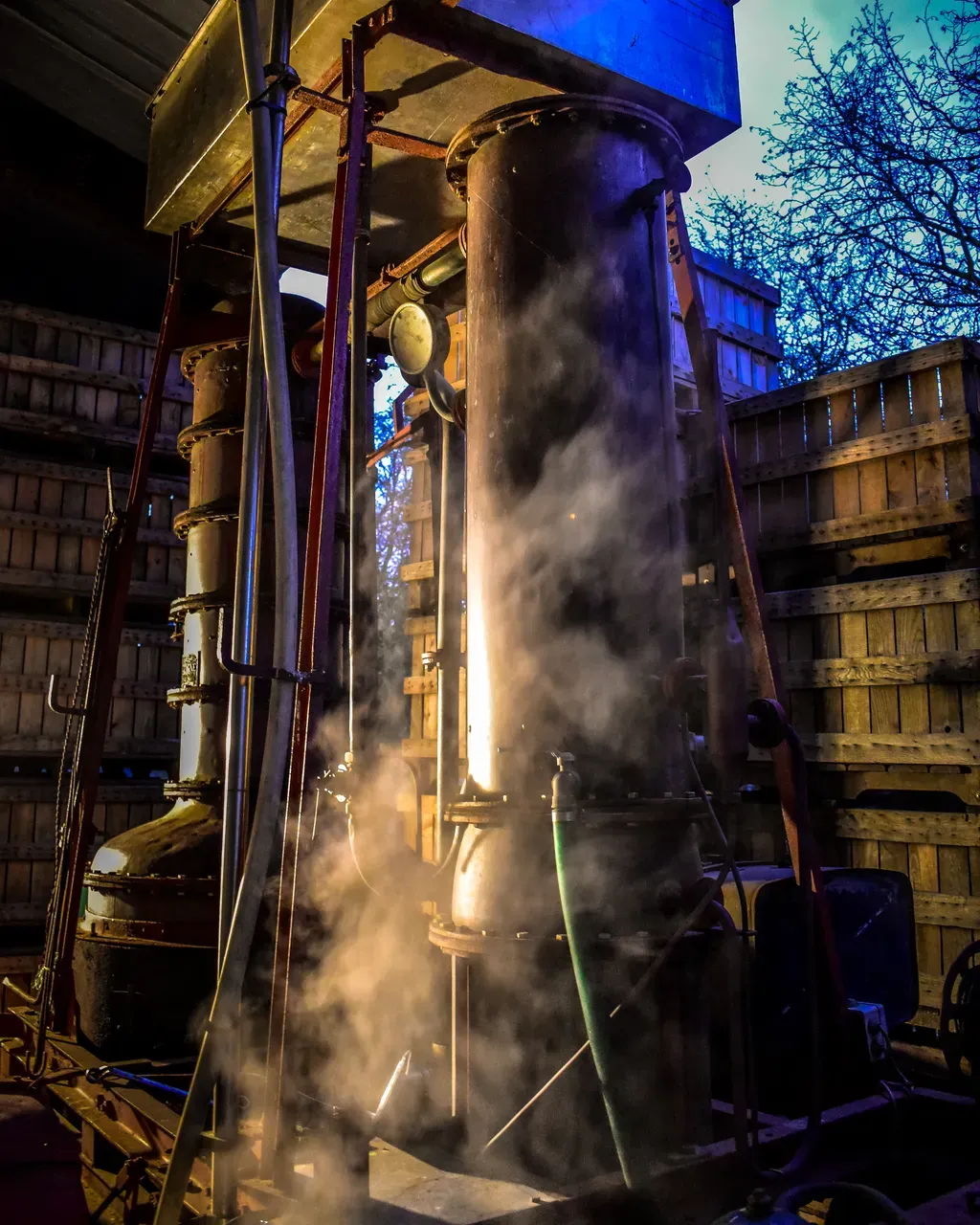
Today, our still runs on heating oil. It's a fossil fuel, imported, and the single heaviest item in the footprint of our Calvados.
A project is underway to replace the oil-fired boiler with a wood-fired boiler. Changing the heat source, without touching the craft of distillation.
The wood of our orchards
Every winter, pruning the apple trees produces wood. Until now, it was waste. Tomorrow, it will be our fuel. This wood will heat the still, on site, with no transport and no fossil energy.
The orchard will thus feed its own distillation. The goal: Calvados distilled from a resource produced on the estate, and almost carbon neutral.
This project comes at a cost. Adapting the still and installing a wood-fired boiler require an investment we can't shoulder alone. To fund it, we're preparing a crowdfunding campaign. Contributing means making a Calvados heated with wood from the orchard possible.
Join our crowdfunding