Our terroir
Valambray, Val-ès-Dunes
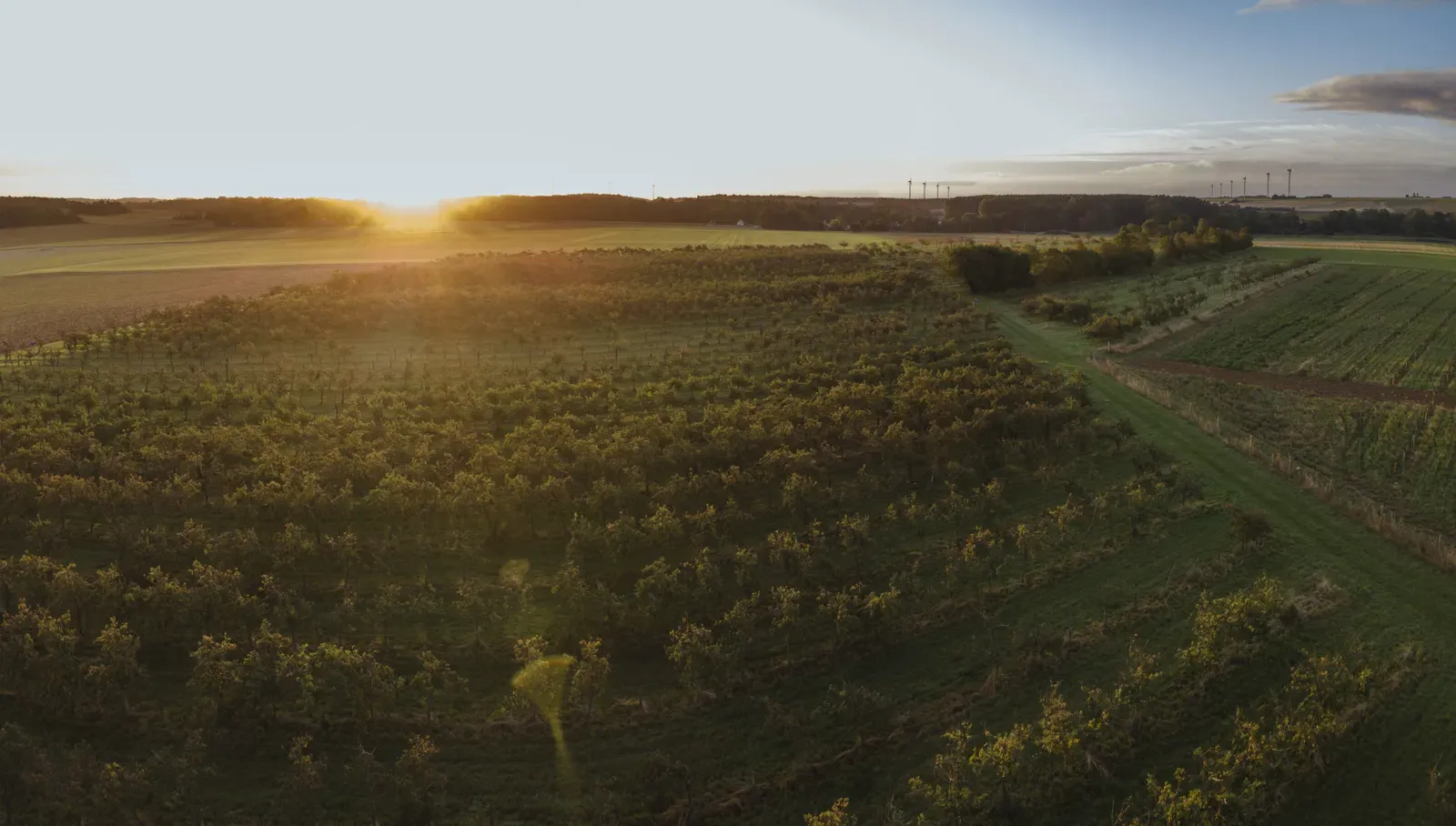
The estate is established in Val-ès-Dunes, a plain in the Calvados region south-east of Caen. Its soil and climate bring together the conditions for growing the cider apple, on land steeped in history.
A plain in Calvados
The terroir
The orchard grows on clay-limestone soil, resting on Jurassic bedrock. The clay retains water and feeds the tree; the limestone drains and gives the apples their structure. An honest soil, yielding fruit with character.
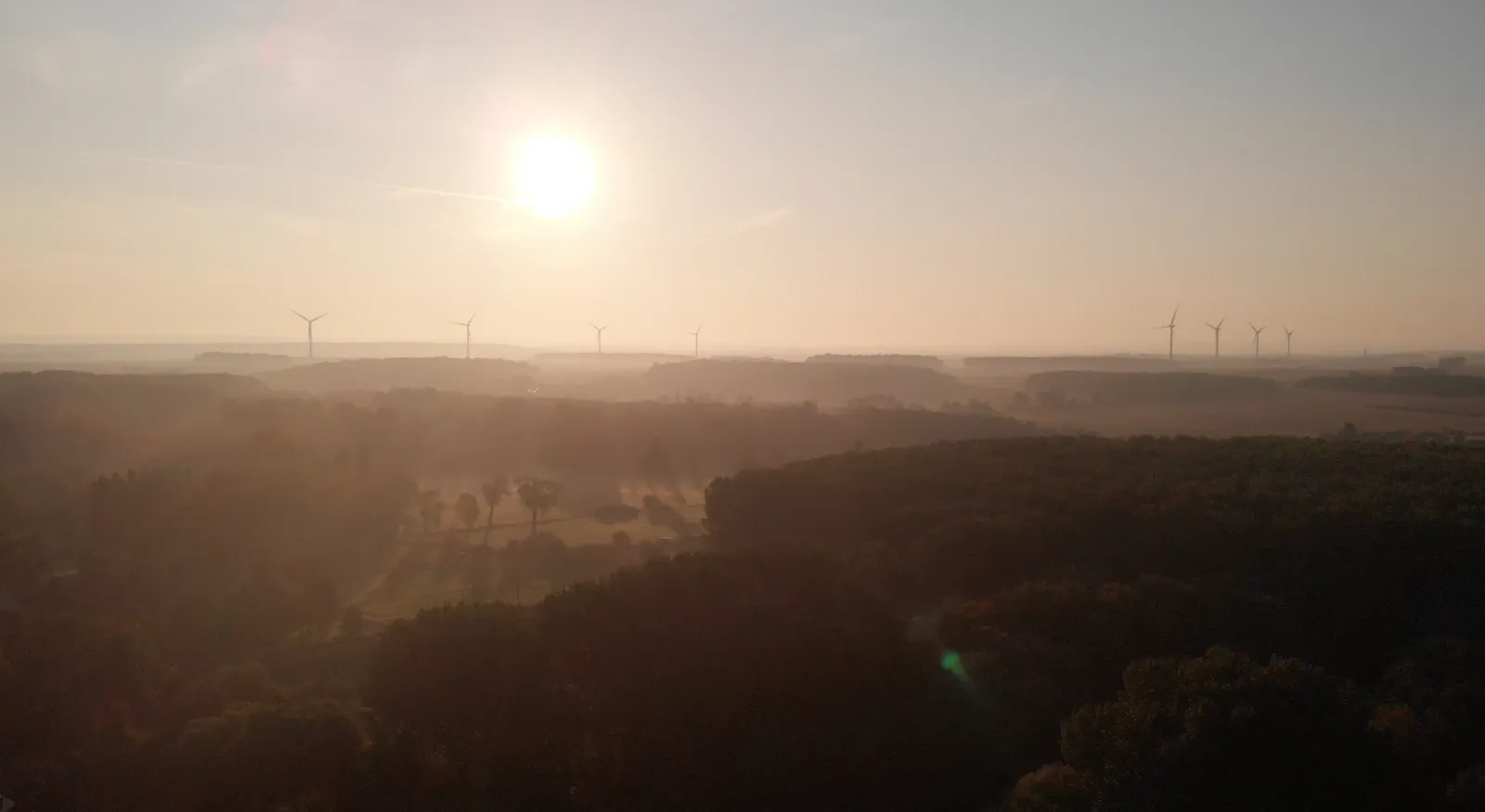
The climate is oceanic, tempered by the Muance river that runs through the estate. Rainfall stays regular and summers mild, without excessive heat. This coolness slows ripening: sugar builds slowly and acidity holds, giving the aromas time to develop.
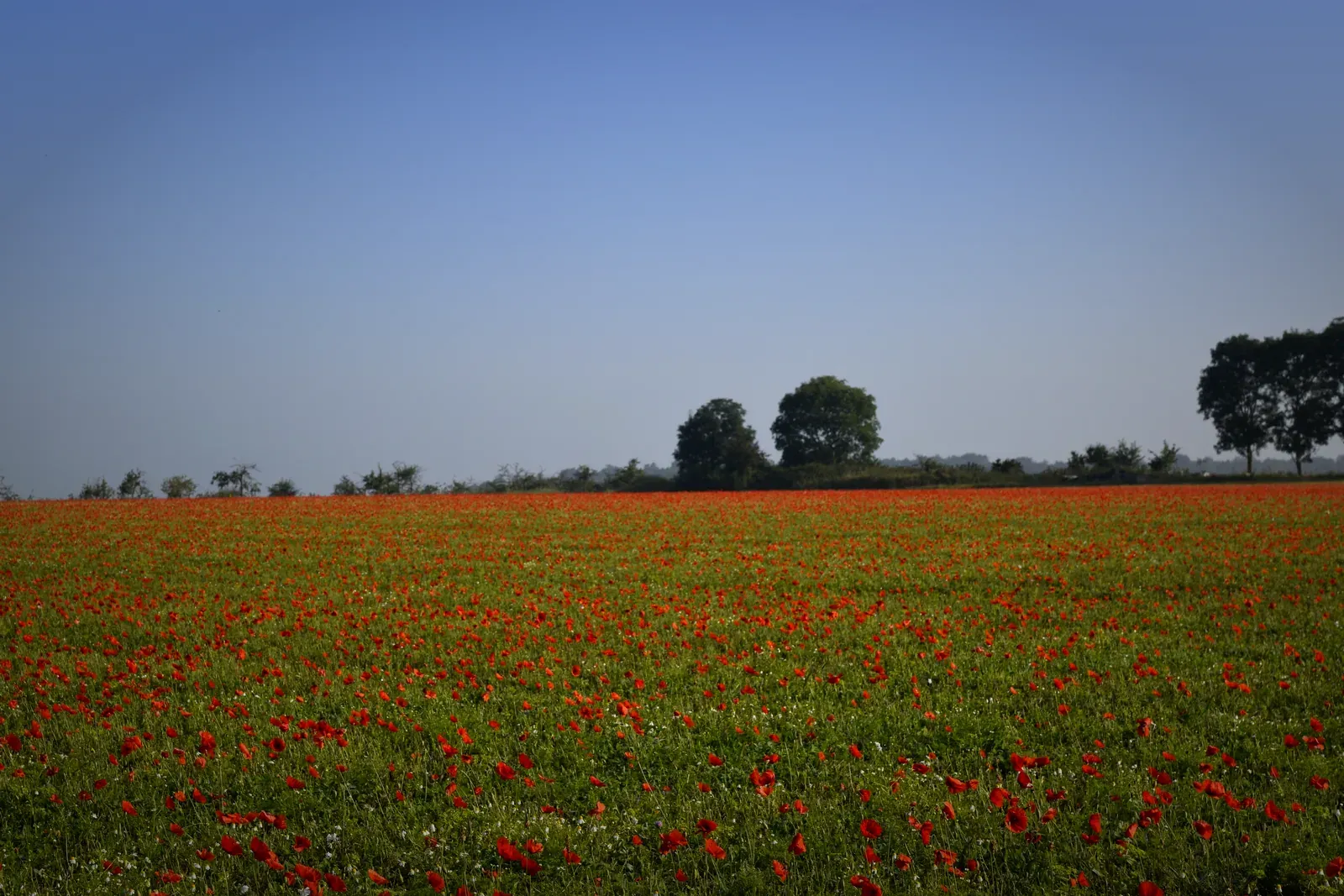
The plots form small pockets bordered by hedges, including 2.6 km replanted since 2020. This hedgerow network shelters birds and beneficial insects, and limits pests without treatment. The orchard remains woven into its landscape.
A protected land
Organic since 1967: 18 years before the label
In 1967, Maurice Pitrou converts the farm to organic farming. France has no organic label yet: the AB mark won't appear until 1985. At the same time, the rest of French agriculture turns to synthetic fertilizers and pesticides.
Since then, the soil has received neither pesticide nor chemical fertilizer. 59 harvests have followed one another on the same land, without a single synthetic molecule. Few French farms can say the same.
This isn't a recent conversion achieved in three years to display a logo. It's half a century of continuity, which has given the soil time to find its balance again.
This longevity is also a health safeguard. Alerts about food contamination keep multiplying, from forever chemicals to the cadmium in phosphate fertilizers. These chemical inputs accumulate in soils for decades. Ours has received none since 1967.
59 years
no synthetic pesticide or fertilizer, since 1967
A land steeped in history
Two thousand years on the same land
The estate takes its name from the hamlet of Cinq Autels ("Five Altars"). In Gallo-Roman times, a Roman road crossed this land, lined with five stone tables where offerings were laid. Two thousand years later, the same land carries our apple trees.
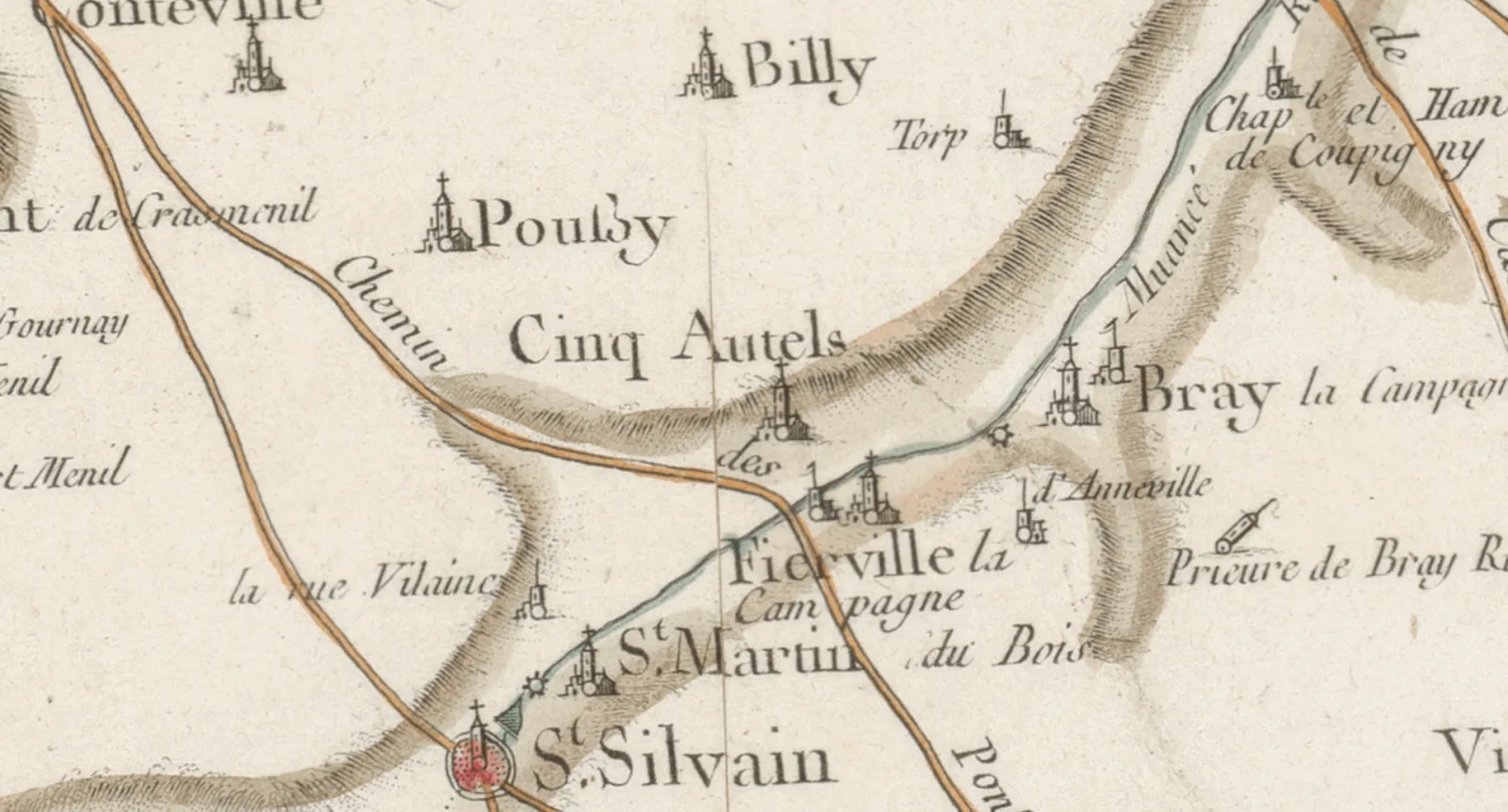
This plain was also a battlefield. On August 10, 1047, the young Duke William the Bastard, nineteen years old, allied with the King of France Henry I, faced a coalition of rebel barons here. He emerged victorious. This victory made him the future William the Conqueror, twenty years before Hastings.
Everyone knows Hastings, 1066. Almost no one knows Val-ès-Dunes, 1047. Yet it's here, on the land where our apple trees now grow, that it all began.