From orchard to glass
The gesture
and time
A great cider is born in the orchard, and built with every gesture through to bottling. From the tree to the first sip, this is our work.
The orchard
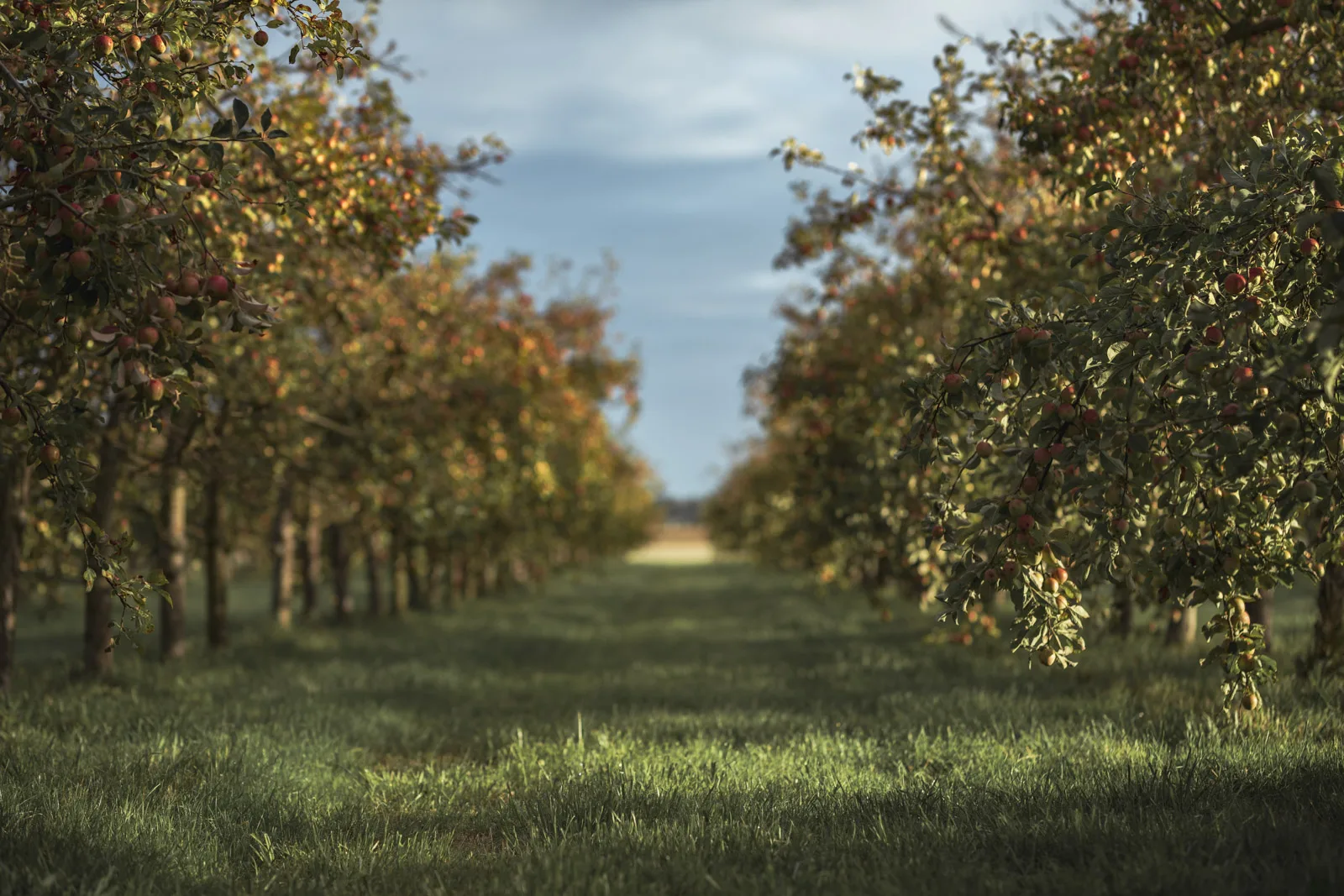
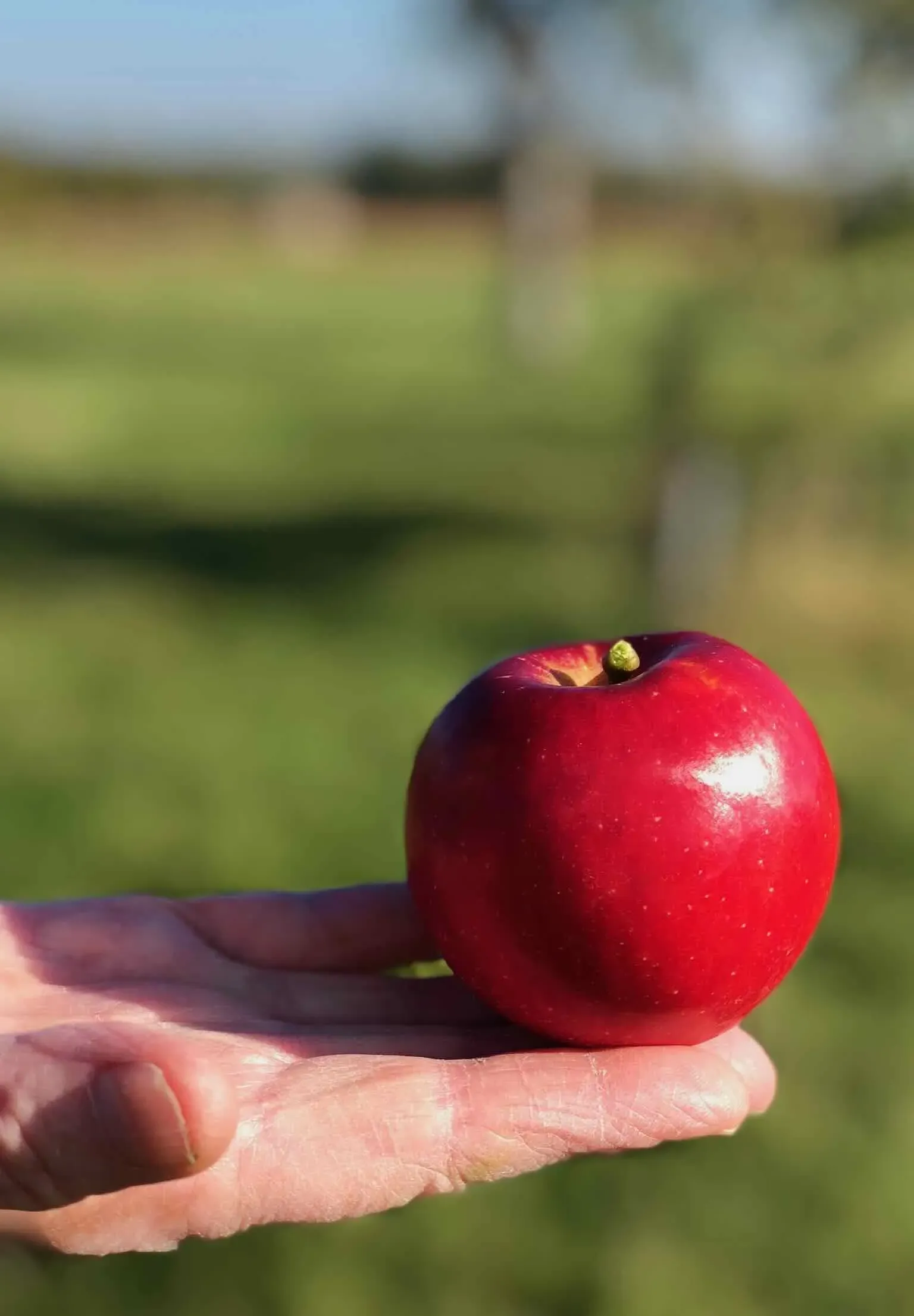
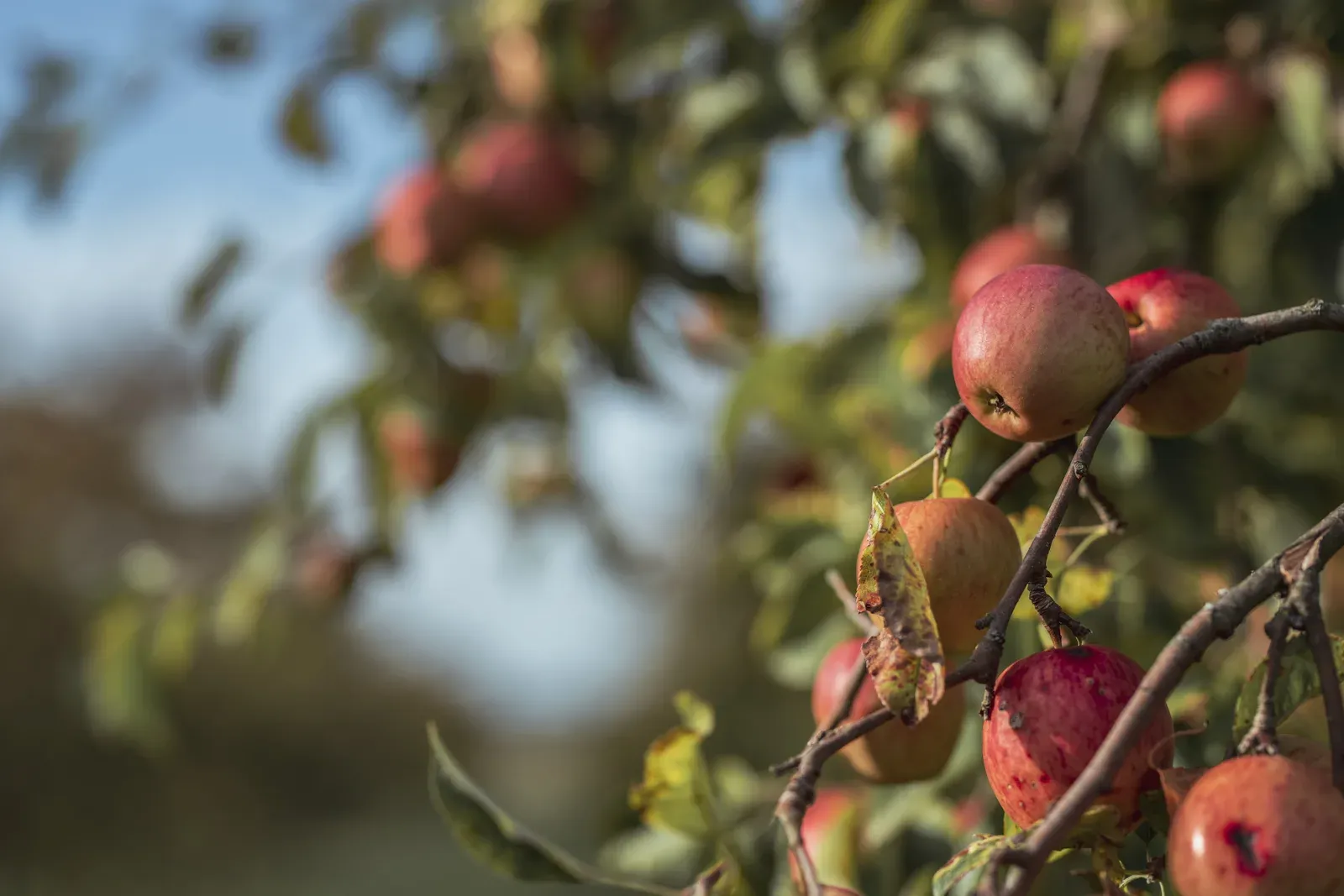
Everything begins in the orchard. Thirteen hectares planted with fifteen heritage varieties of cider apples: Veret de Carrouges, Judor, Locard vert, Rouge Duret, Douce Coëtligné, Tête de Brebis, Douce Moën, Marie Ménard, Kermerrien, Petit Jaune, among others. Sharp, bitter, sweet, bittersweet: it's their blend that gives the cuvées their balance.
Since 1984, the orchard has been managed through agroecology: permanent grass cover between the rows, hedges and windbreaks, the return of beneficial wildlife. In 2020, these thirteen hectares were replanted, more than nine thousand trees of heritage varieties. Nicolas, agroecology engineer, is now in charge of it.
No synthetic pesticide, no chemical fertilizer, no herbicide. Organic since 1967, without interruption. A living orchard, giving apples with character, different from one year to the next.
Harvest
and pressing
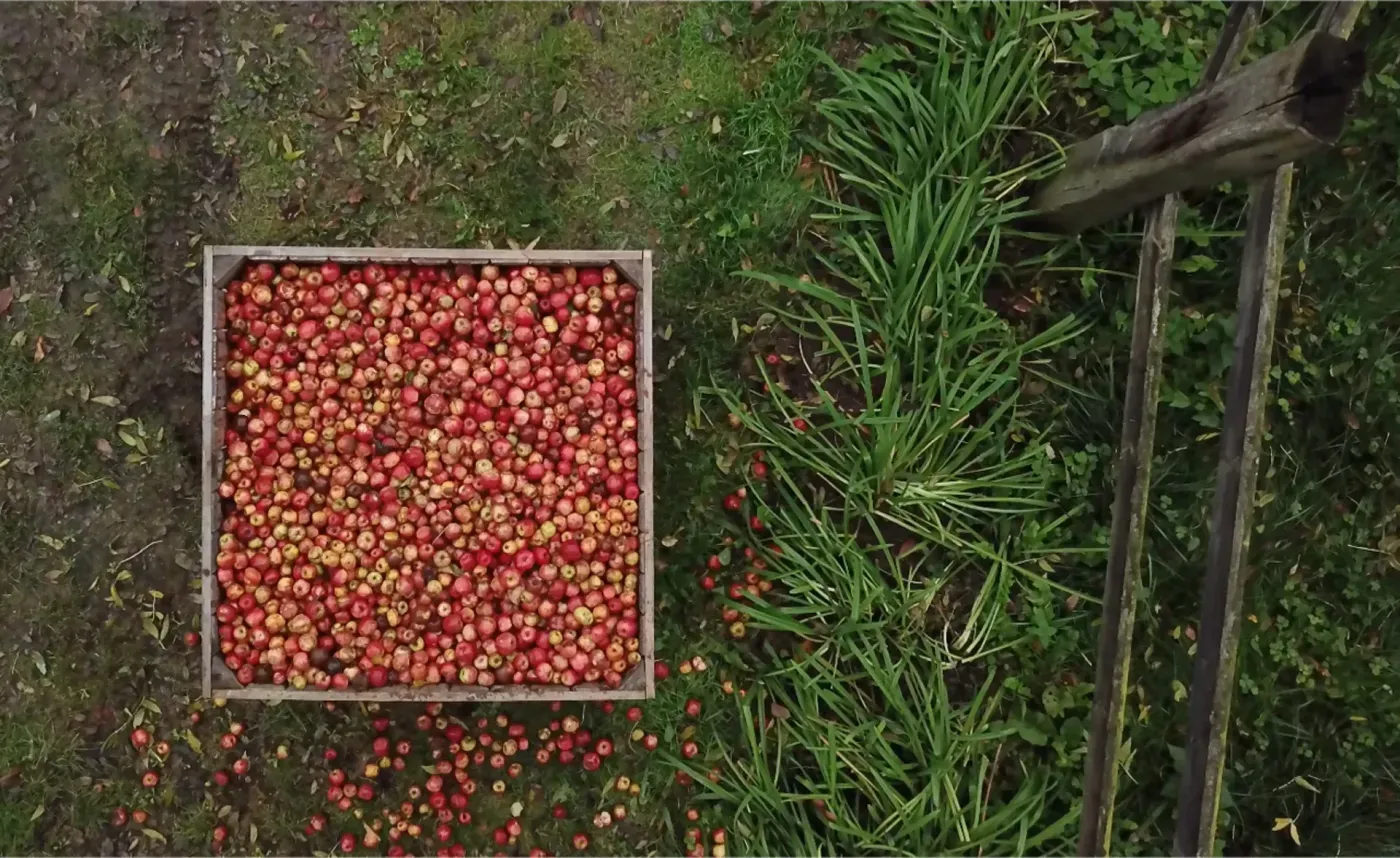
At the estate, apples aren't picked from the tree: they're gathered. The fruit falls to the ground at full ripeness, and that's when it's harvested. Since the varieties don't ripen all at once, several passes are needed.
Once gathered, the apples are sorted by hand. Only the finest fruit is kept, sound and at the right ripeness. This sorting is essential to the quality of the cider.
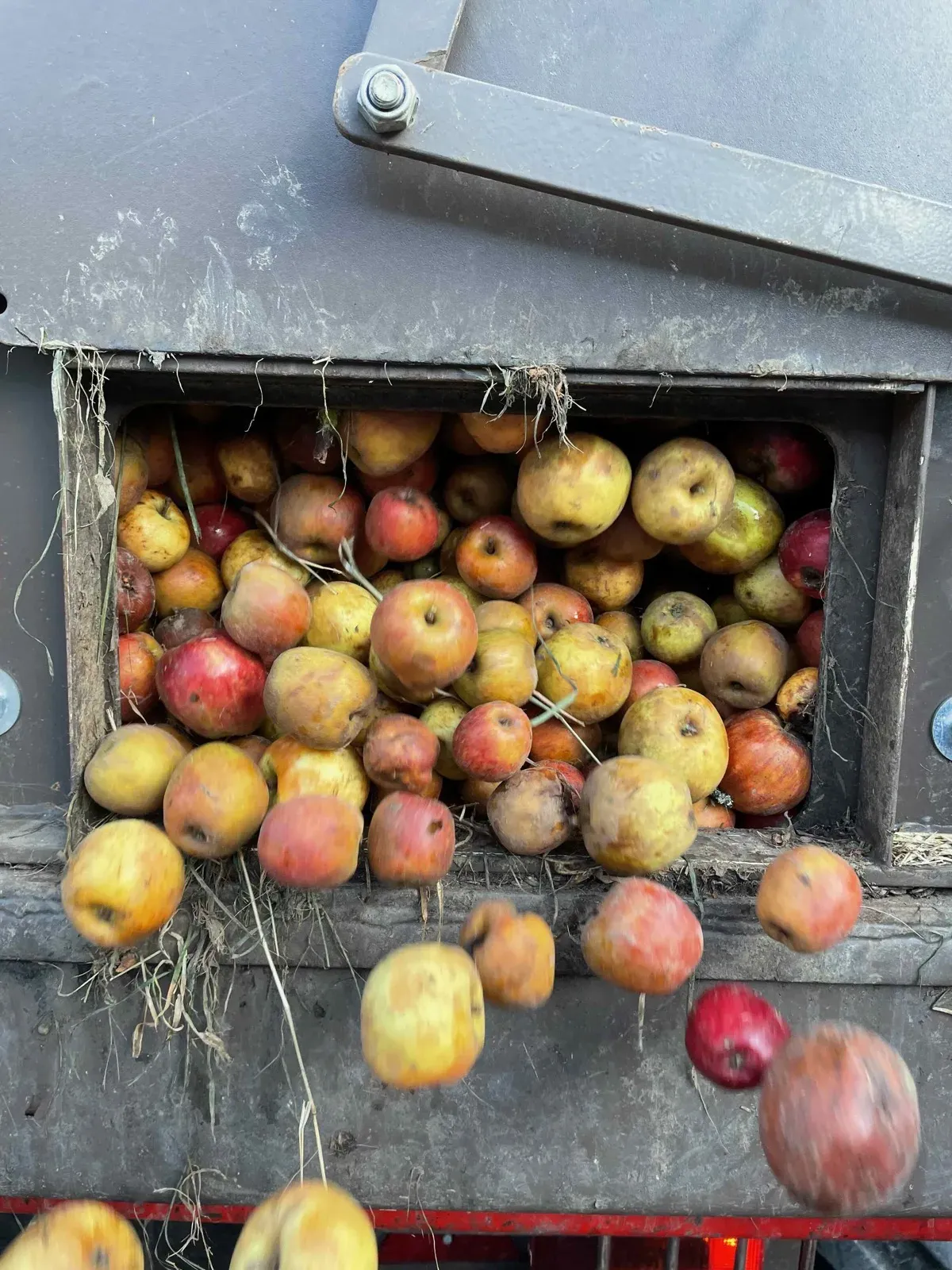
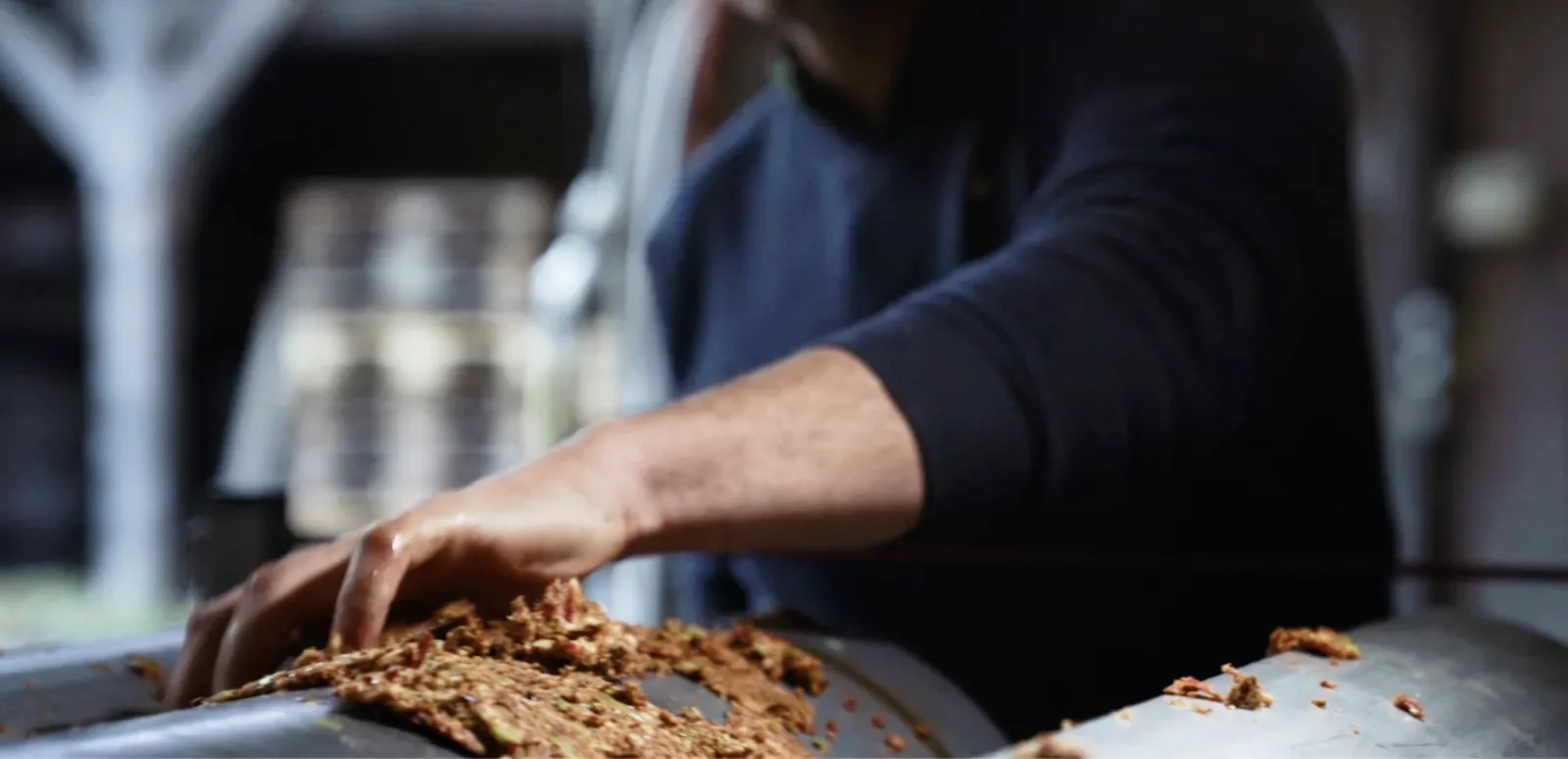
The selected apples are crushed, then left to macerate for a few hours. This light maceration releases the fruit's aromas and tannins, and prepares the natural compounds needed for fermentation.
Then comes pressing, on a belt press: the pomace passes between two cloths, under gentle, progressive pressure. The juice flows out without crushing the pips, which preserves its finesse.
The resulting must arrives in the cellar straight from pressing: with no added sulfites, yeasts or water, unlike many industrial ciders. It keeps its microbial population intact, ready to ferment naturally.
Natural clarification
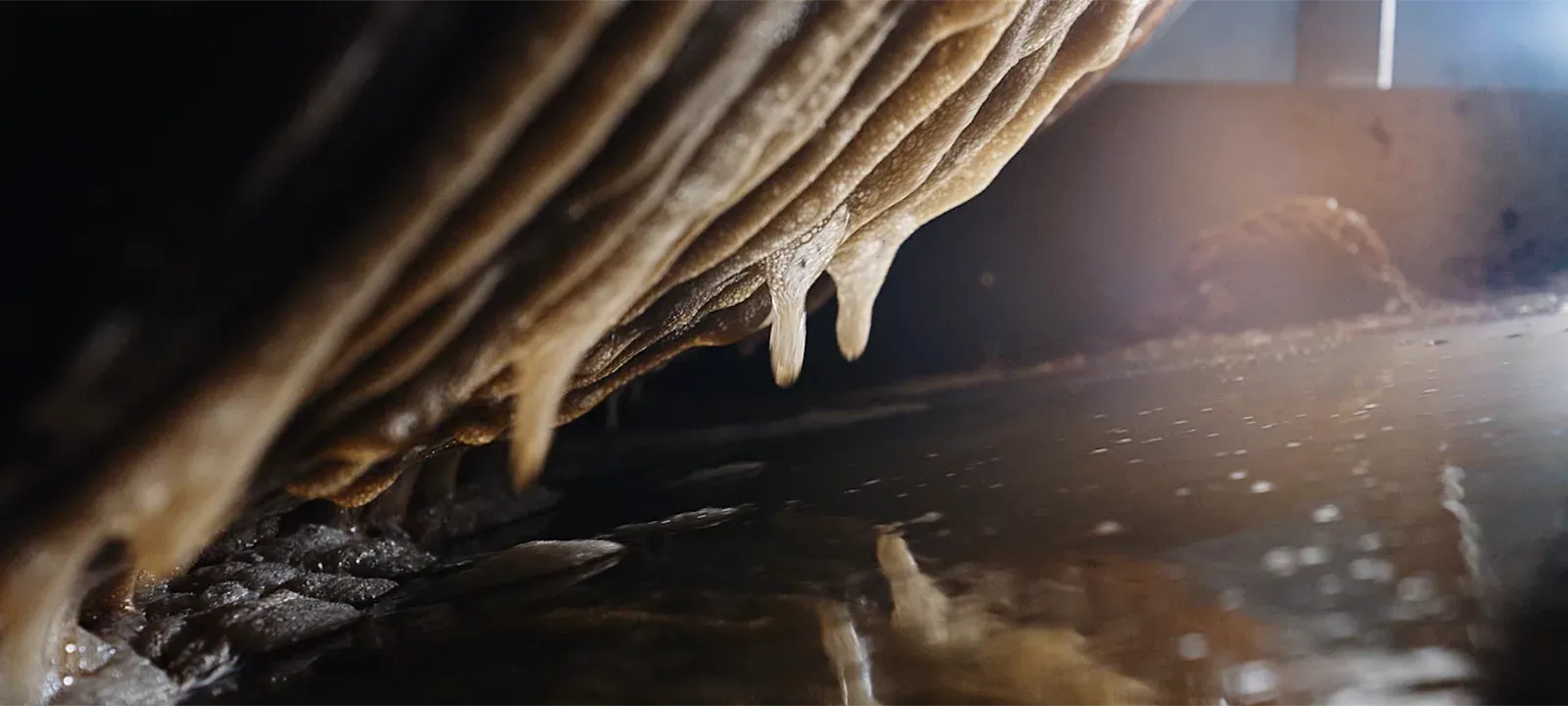
Before fermentation, the juice clarifies on its own. The apple's pectins coagulate and rise to the surface, forming a thick brown crust known as the chapeau brun, the "brown cap" of the traditional keeving process. The heaviest lees sink to the bottom. Between the two, the must turns clear, and is racked off carefully, away from both cap and lees. This slow clarification strips the juice of nutrients and slows fermentation. It's this long wait that preserves the fruit's natural sugars and the finesse of its aromas.
The cellar and fermentation
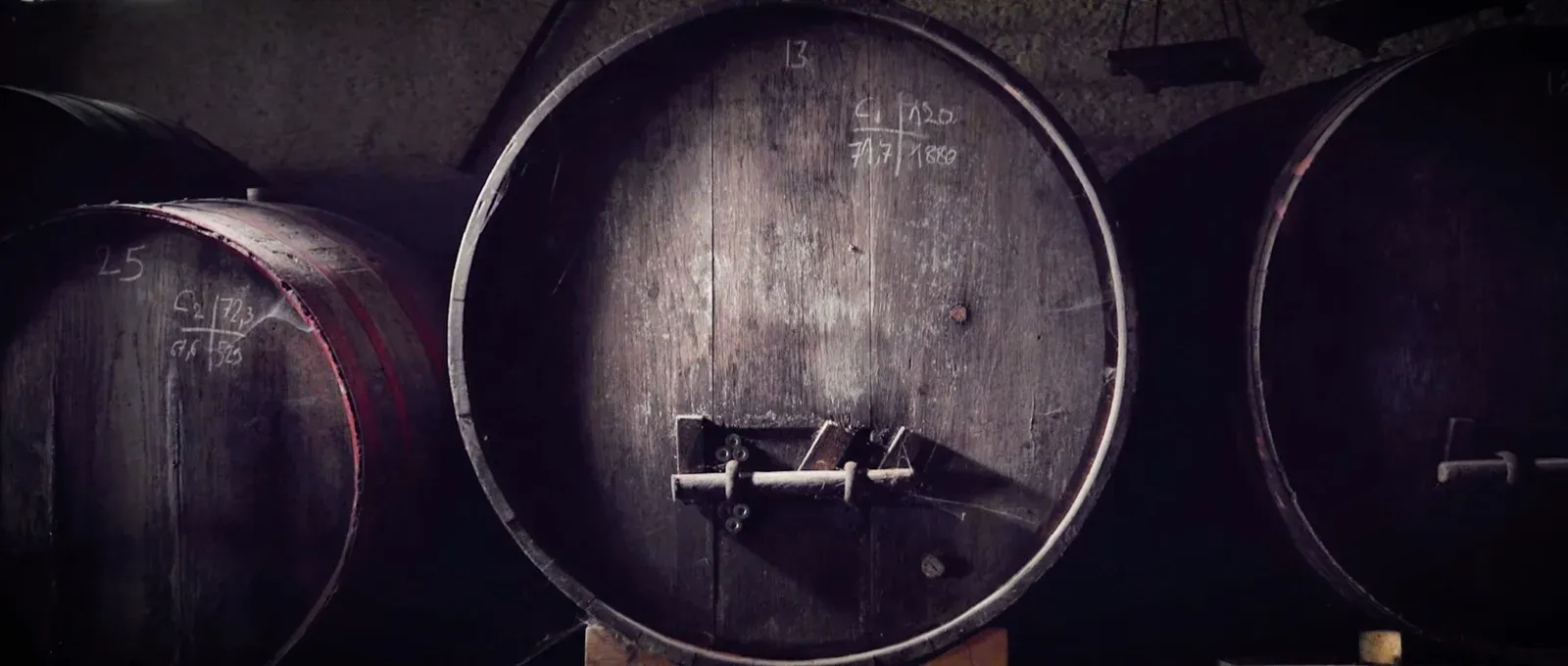
Fermentation relies solely on the yeasts present on the apples and in the cellar. No selected yeast. Our cellar hosts its own yeast population, established over decades. It's what gives our ciders their signature. With the same apples, two neighboring cellars would yield two different ciders: the cellar is part of the product.
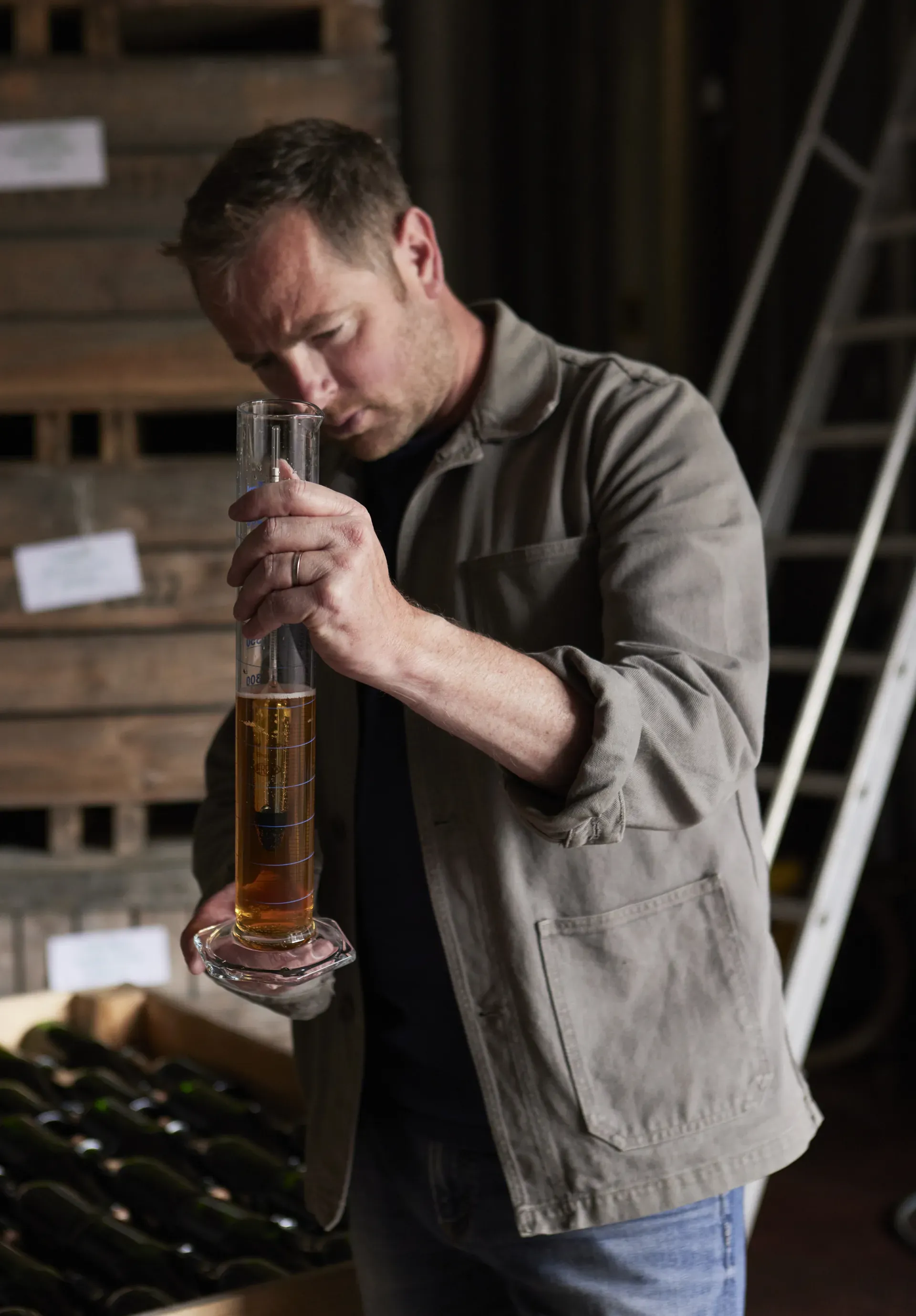
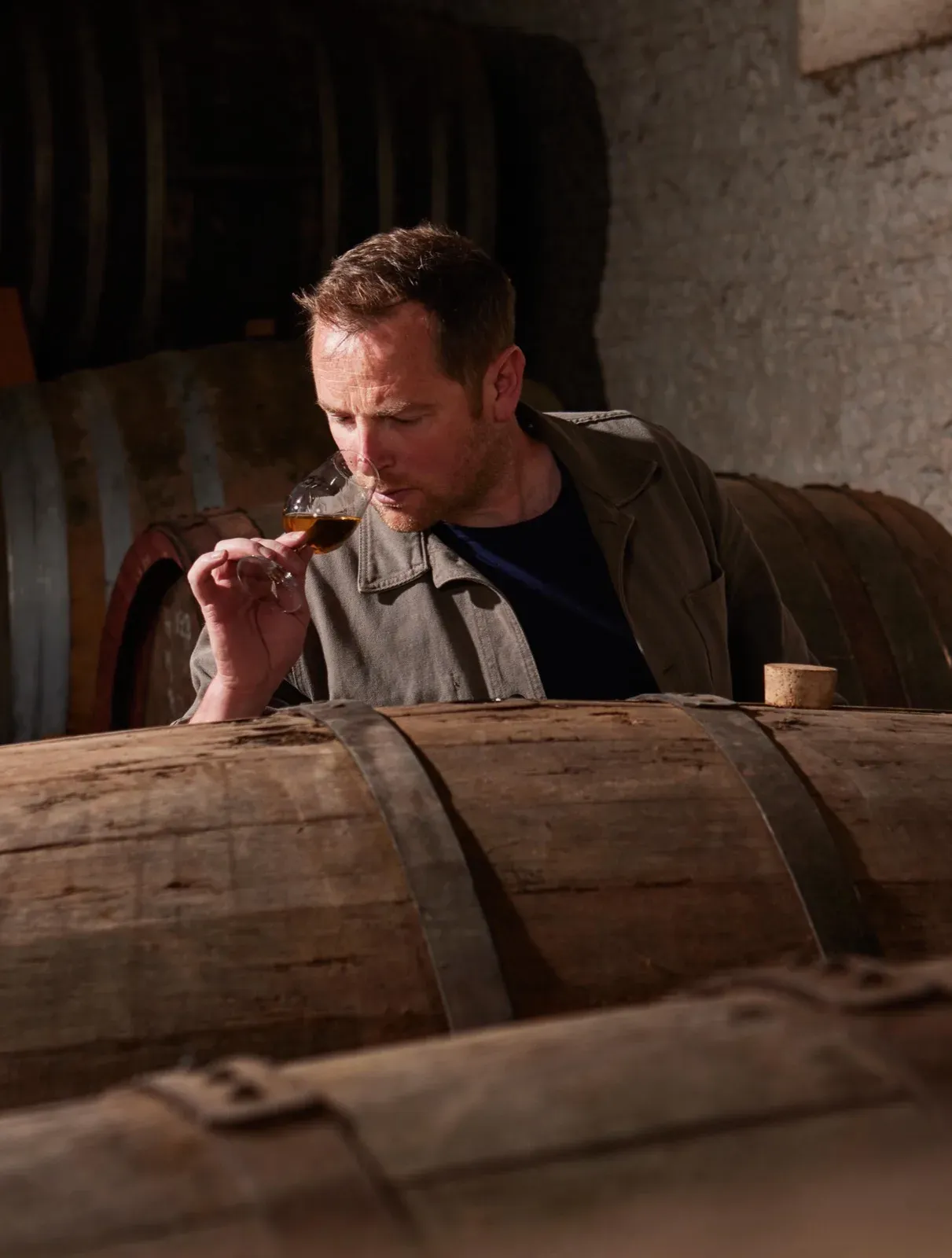
Our cellar master, a trained oenologist, watches over this stage. Temperature monitoring, density checks, regular tastings: the gesture that reveals what the fruit has given.
Ageing
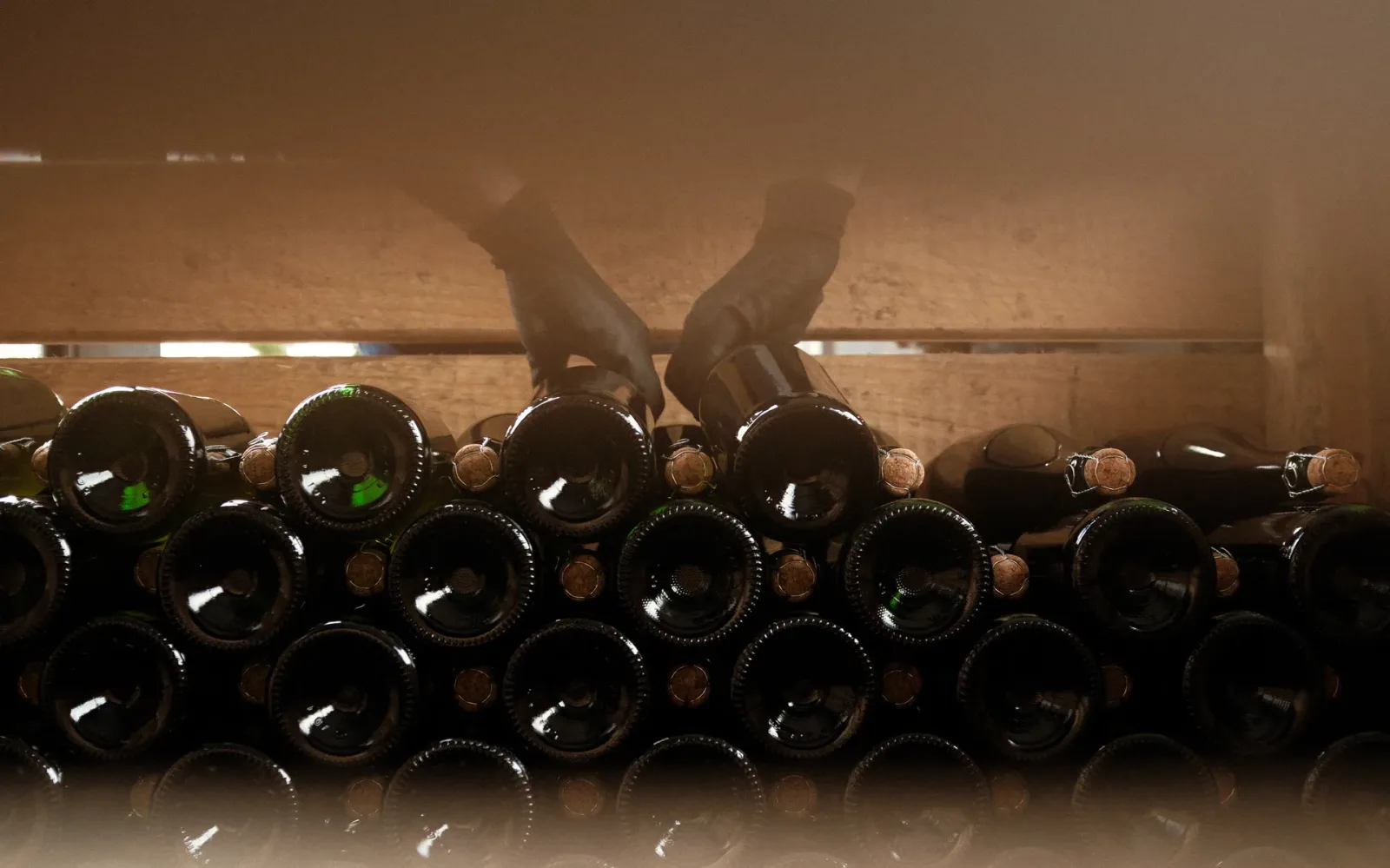
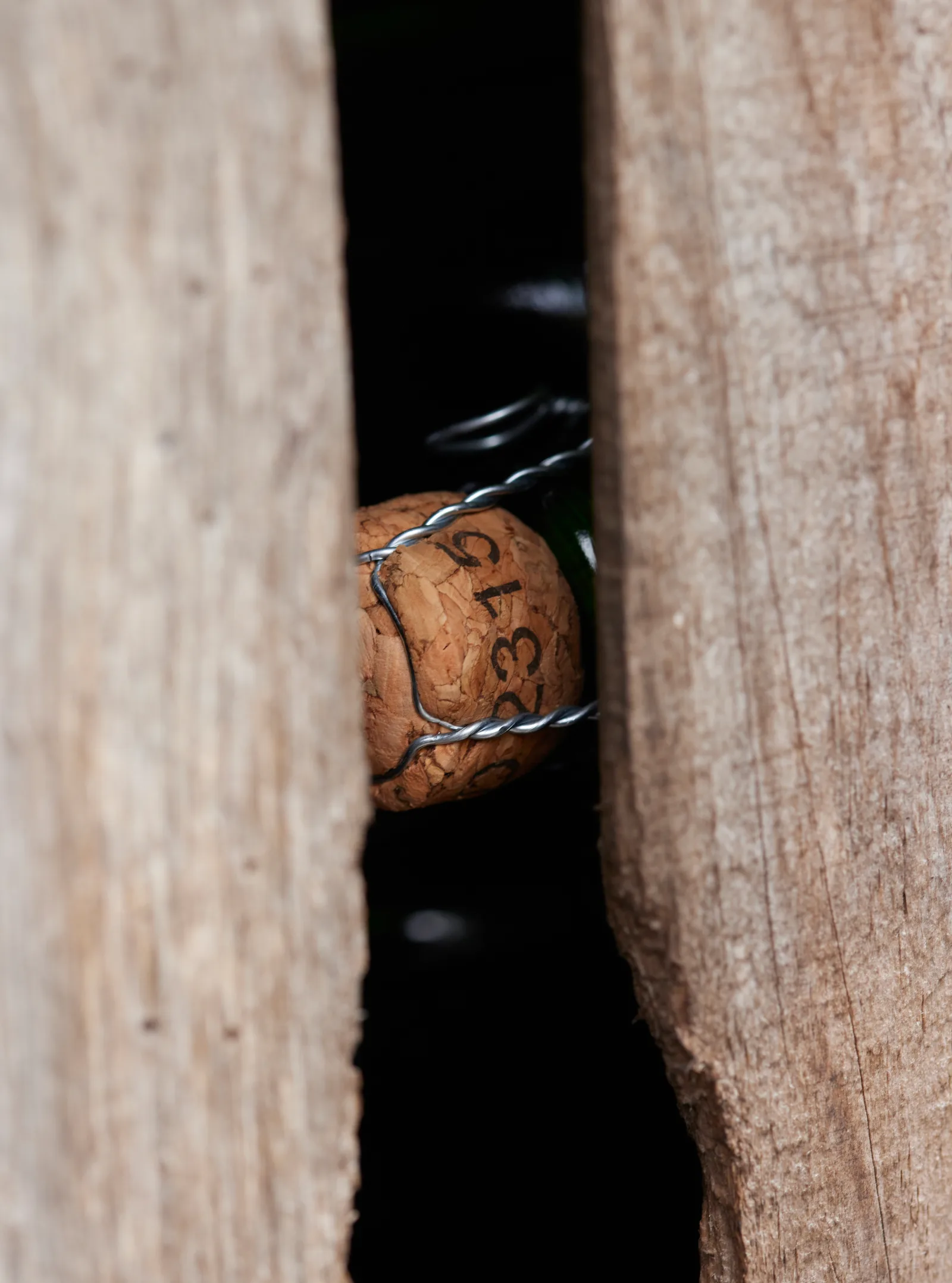
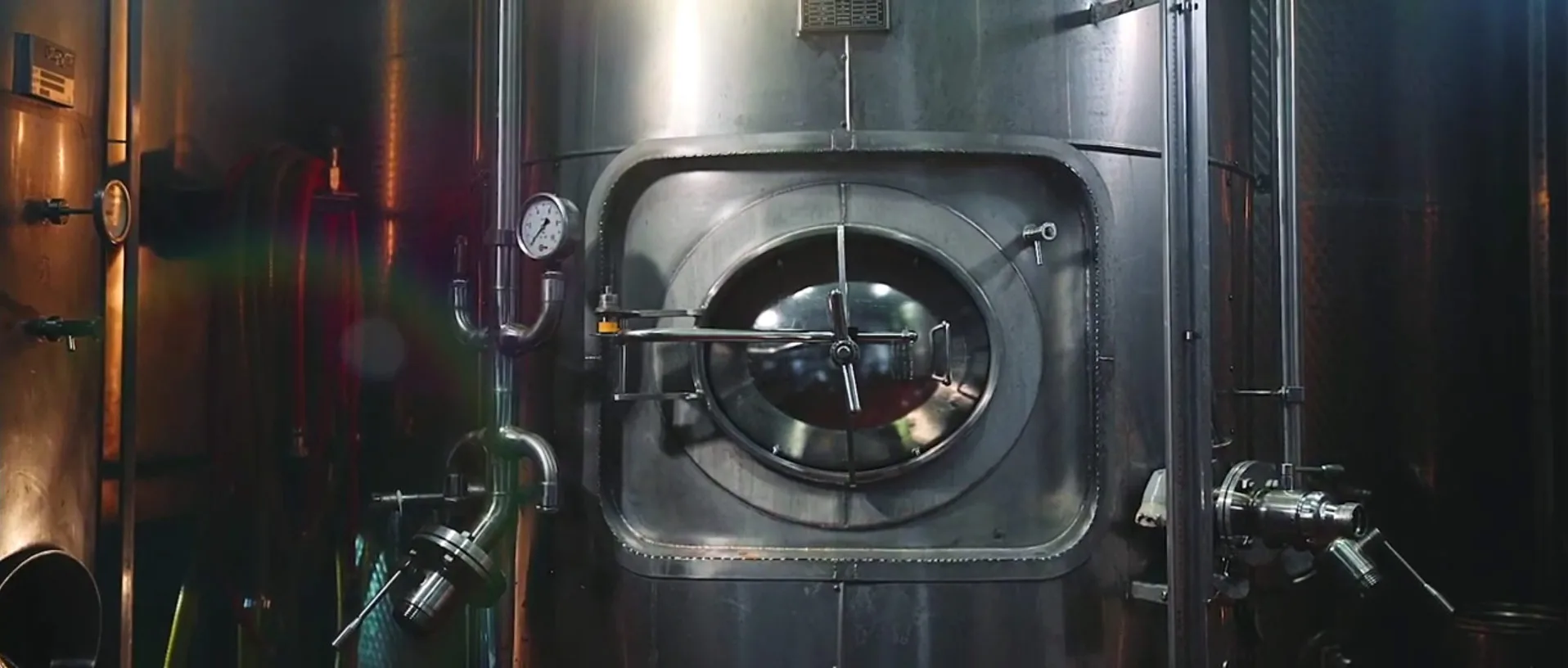
Fermentation continues for several months in tank. Once the cider reaches the profile we're after, it is bottled. The sparkle forms there, in the bottle, from the residual sugars, following the ancestral method.
Ageing on lees ranges from six months for the brut ciders to eighteen months for the Cuvée Abel, with disgorgement à la volée. It gives the creaminess on the palate, the brioche notes, the length. In bottle, the cider keeps evolving: the cellaring cuvées improve over several years.
The film
Our craft in pictures
This is the work you'll find in every bottle.
Discover the cuvées