Carbon project no. 4
Eco-grazing in the orchard
Why we mow
A large part of orchard upkeep is mowing the ground cover. We don't mow for looks. Mowing first of all limits competition between the tree and other plants, grasses in particular, which draw the same water and the same trace elements from the soil as the apple tree.
The height of the grass matters too. Too tall, and it bruises the fruit that falls to the ground and gets in the way of the harvester. Keeping it in check means protecting the harvest.
Sheep instead of the tractor
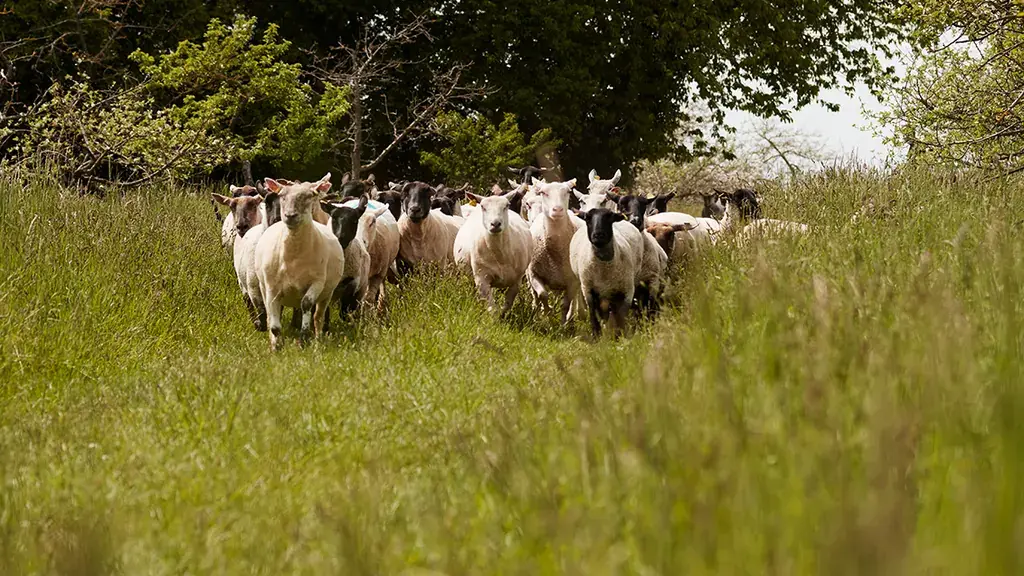
Every mowing means a tractor pass, and therefore diesel. To cut them down, we introduced eco-grazing in 2022: a flock of around twenty sheep maintains the grass between the apple trees, across some ten hectares.
The animals aren't ours. We set up a partnership with a local shepherd: he entrusts us with his flock for the season, and we give it quality grazing land, free of pesticides and synthetic fertiliser. A simple exchange, two trades that complement each other.
What the sheep bring
The animals graze the grass and, along the way, produce a natural fertiliser that goes straight back into the soil. By replacing the tractor, their presence also prevents soil compaction. Less compacted ground lets life thrive near the surface.
Less tractor, more biodiversity, a soil fed without inputs. For the most part, the orchard looks after itself.
Eco-grazing elsewhere
This practice is gaining ground in French agriculture. The Réseau Éco-Pâturage maps initiatives across the country, and Solagro publishes studies on mixed crop-livestock farming.