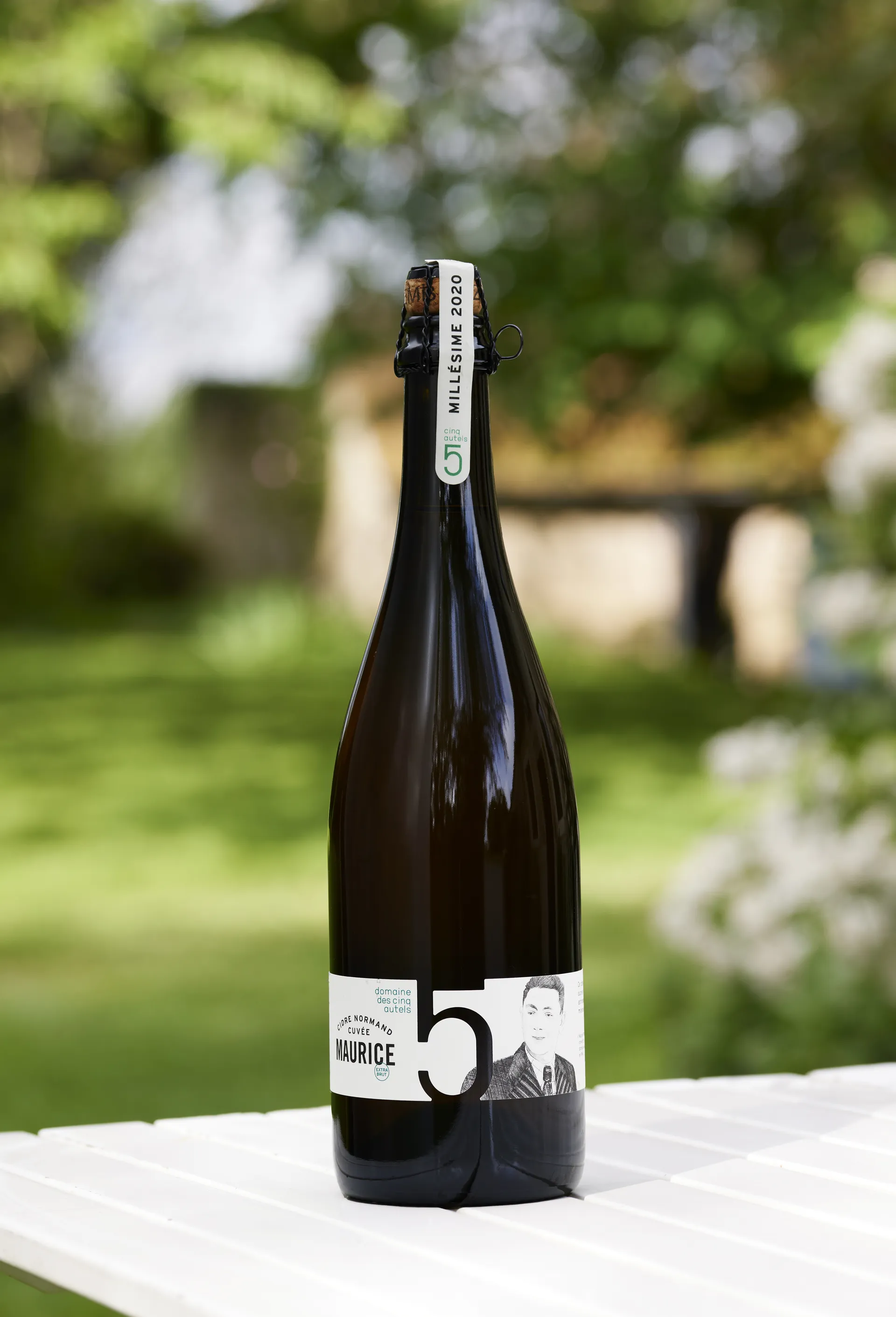
With a galette complète, you need a structured dry cider. Its bubble cuts through the fat of the egg and melted cheese, its acidity answers the buckwheat batter. Our Cuvée Jean-René, a cellaring cider at 5.5% vol, organic and free of added sulfites, holds that structure on the palate without ever masking the ham. Here’s why the pairing works, and how to serve it.
Why a structured dry cider works with a galette complète
A galette complète brings together three rich or salty elements: the egg yolk, the melted cheese, the ham. A cider that’s too light gets swamped. It needs body.
The Cuvée Jean-René comes from a blend of heirloom varieties chosen for their richness in polyphenols, which gives it a light, noble bitterness. That bitterness cuts through the fat of the melted cheese instead of drowning in it. Fermentation, slow and carried out in vat, leaves no residual sugar. The galette stays a savoury dish, and the cider has to stay dry.
Then there’s the bubble. Fine and persistent, it rinses the palate between bites, the way it would with an even richer paste, like raclette. Notes of mild spice and yellow fruit (mirabelle plum, apricot) answer the light caramelisation of the batter, cooked on the billig griddle.
The estate’s cuvée for this galette
The Cuvée Jean-René is named after Jean-René Pitrou, who took over the estate in 1984 with his wife Claude. He structured the range and launched Calvados production. This cuvée keeps that same rigour: a cider built to last.
It comes from heirloom orchard varieties, grown on clay-limestone soil along the Muance river, fermented by the cellar’s wild yeasts alone. Released early from the cellar, it keeps an edge of rigour. After two or three years, it rounds out on yellow fruit, without losing its structure. A bottle left to wait a few months before serving gains in roundness without losing the backbone that stands up to the ham.
Serving
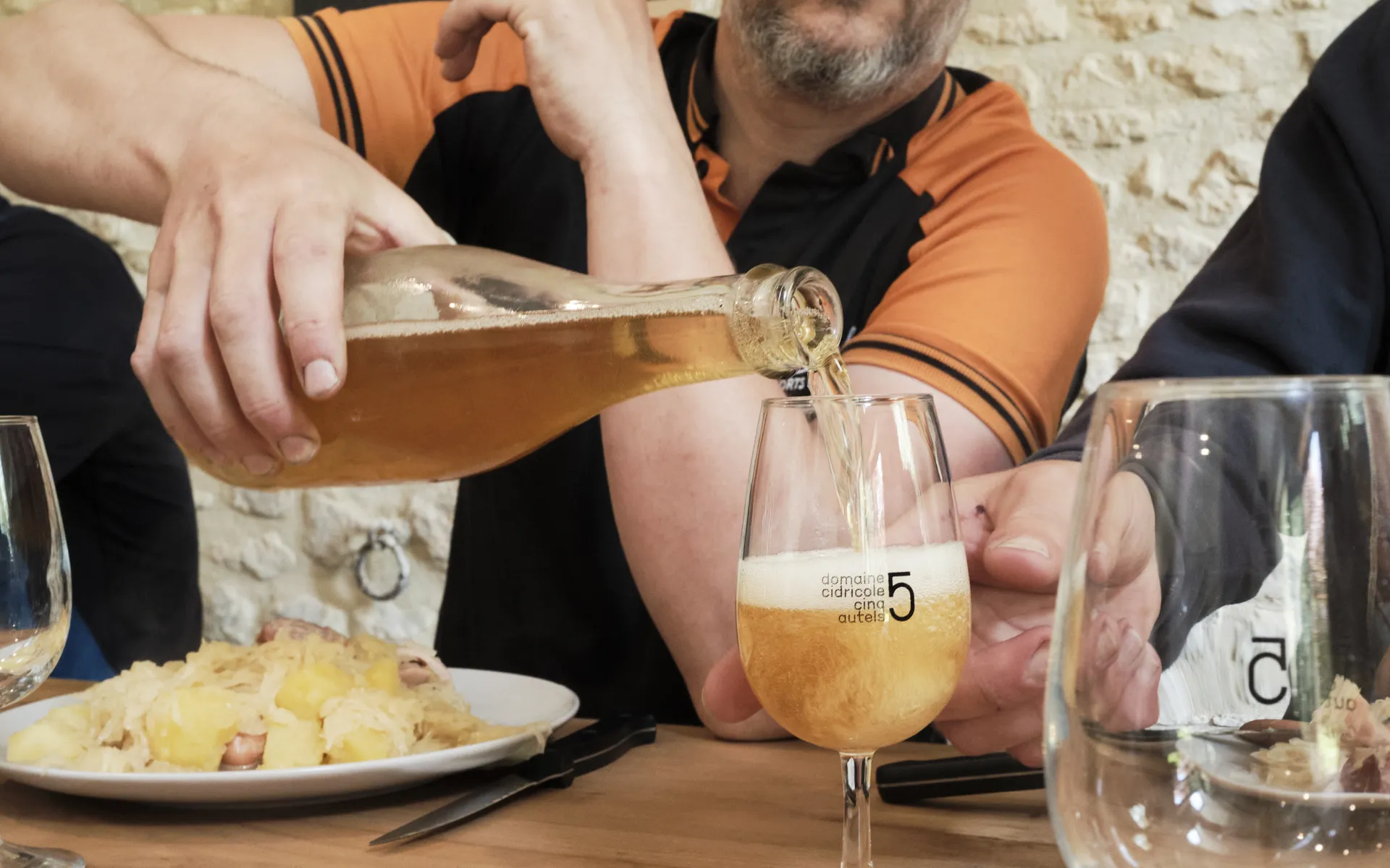
Serve this cider between 8 and 10°C, a touch warmer than an extra-dry. A Norman cider glass or a Breton bolée bowl both work: the bolée changes the sensation on the palate, not the pairing.
Open the bottle when you sit down to eat. If the meal ends with a sweet crêpe, keep what’s left of the bottle for the next aperitif. Jean-René’s dry profile isn’t built for sugar.
In a crêperie, the same logic applies whether cider is served by the glass or from the keg. A list that distinguishes a cider for savoury galettes from a fruitier one for sweet crêpes avoids the most common mistake. A single profile doesn’t suit an entire meal.
If you’d rather try something else
Two alternatives in the range, depending on the galette.
For a simpler filling, ham and cheese without excess, try Le Brut. Lighter in body, it keeps the same dry finish, without Jean-René’s time in the cellar.
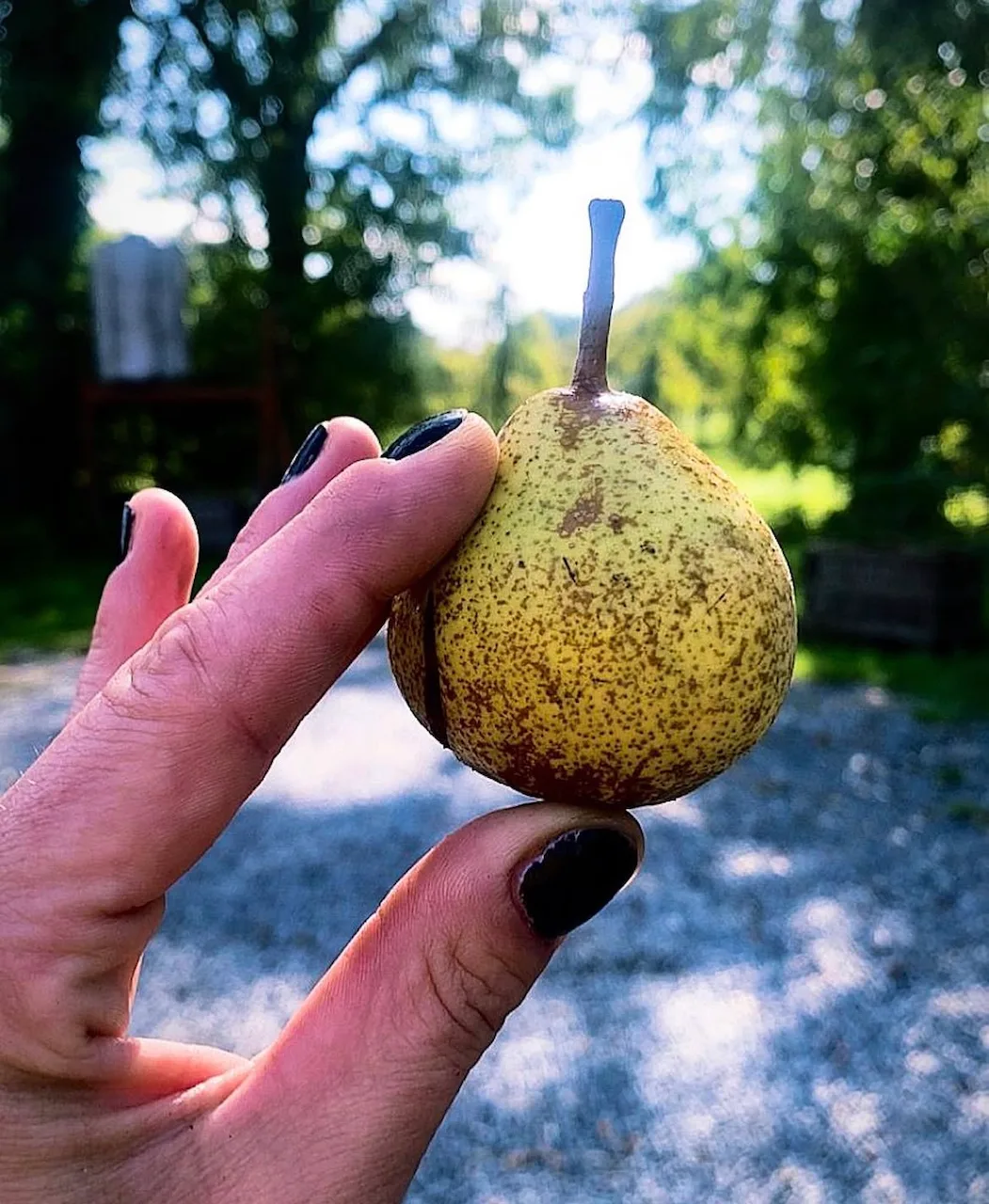
For a goat’s cheese or vegetable galette, try our André, perry pet’nat’. Its floral profile, on fresh pear and white blossom, suits a less salty filling better than ham and cheese.
To compare the whole range, our guide to choosing a cuvée covers the estate’s four families. Another table pairing, what cider to serve with oysters, runs the opposite logic: dry and lively against brininess rather than fat.