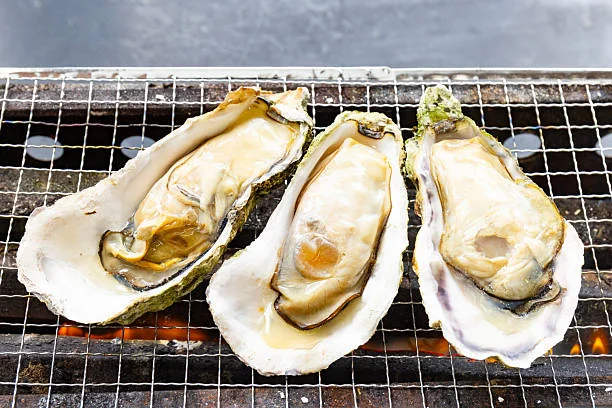
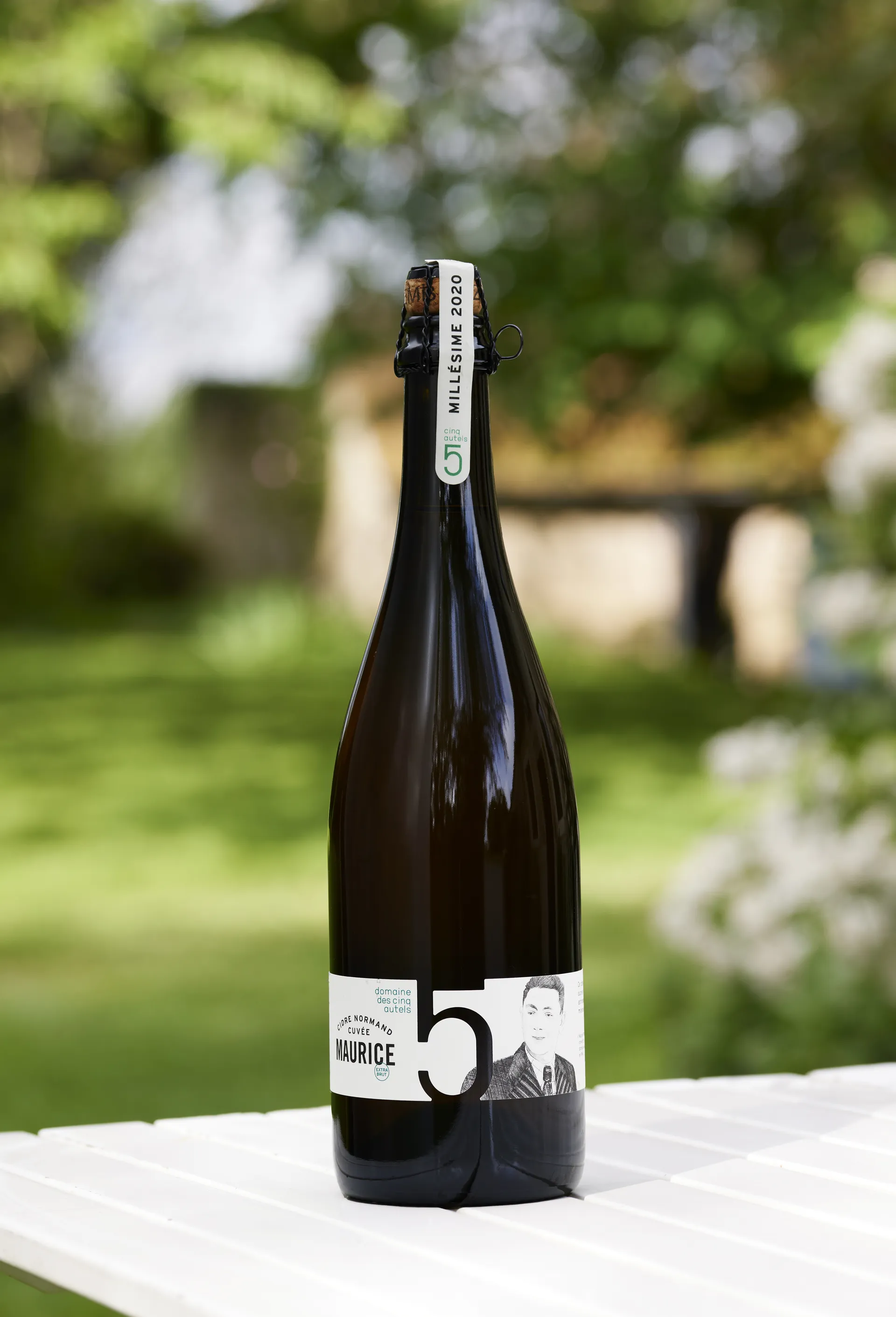
With oysters, you need an extra-dry cider. Dry, mineral, with almost no residual sugar. The shellfish’s brine can’t stand sweetness. It calls for an acidity that extends it without masking it. Our Cuvée Maurice meets that demand, at 6.5% vol, organic and free of added sulfites. Bright colour, nose of citrus and green apple. Taut palate, a fine salinity, a direct echo of the oyster’s own. Here’s why the pairing works, and how to serve it.
Why extra-dry cider works with oysters
An oyster brings salt, brine and a rich texture. A sweet or medium-dry cider would smother that sea taste under sugar. You need the opposite: a profile that’s dry, lively, almost sharp.
Residual sugar matters first. The Cuvée Maurice is made from sharp, bitter orchard varieties, chosen for their low sugar content. Fermentation is pushed all the way through to keep that tension, with no correction and no added sugar. Then comes the acidity: notes of lemon and grapefruit that extend the briny taste instead of erasing it. Then there’s the bubble, an active bead that rinses the palate between oysters, the way a lively, well-chilled Muscadet would.
A briny, rich dish set against a dry, acidic drink: it’s the same principle that makes a Chablis work with oysters. Except here, the strength drops to 6.5% vol instead of 12 to 13%. With a squeeze of lemon on the oyster, the cider’s acidity follows without dissonance. A shallot vinaigrette works too, as long as it stays light-handed.
The estate’s cuvée for this dish
The Cuvée Maurice is named after Maurice Pitrou. In 1967, he converted the estate to organic farming, well before the label existed. This cider keeps that same rigour. Nothing cuts corners, nothing gets corrected.
It comes from sharp, bitter varieties, planted on clay-limestone soil along the Muance river. Fermentation is carried by the cellar’s wild yeasts alone, built up over decades. No added sulfites, no pasteurisation. The sparkle develops in bottle, by the méthode ancestrale, with no added CO2.
On the palate, it stays taut and dry. A fine salinity recalls the seafood it accompanies, a rare point in common between a cider and an oyster.
Serving
Serve this cider chilled, between 6 and 8°C. A white wine glass works better than a flute, it reveals more of the citrus nose. Open the bottle just before sitting down, as a starter, ahead of the main course.
One 75cl bottle covers two to three dozen oysters shared among four people. Keep the rest chilled, upright, away from light, for the rest of the meal. Once the bottle is reopened, the cork doesn’t hold the sparkle for long: it’s best to finish it the same day.
If you’d rather try something else
Two alternatives in the range, depending on the occasion.
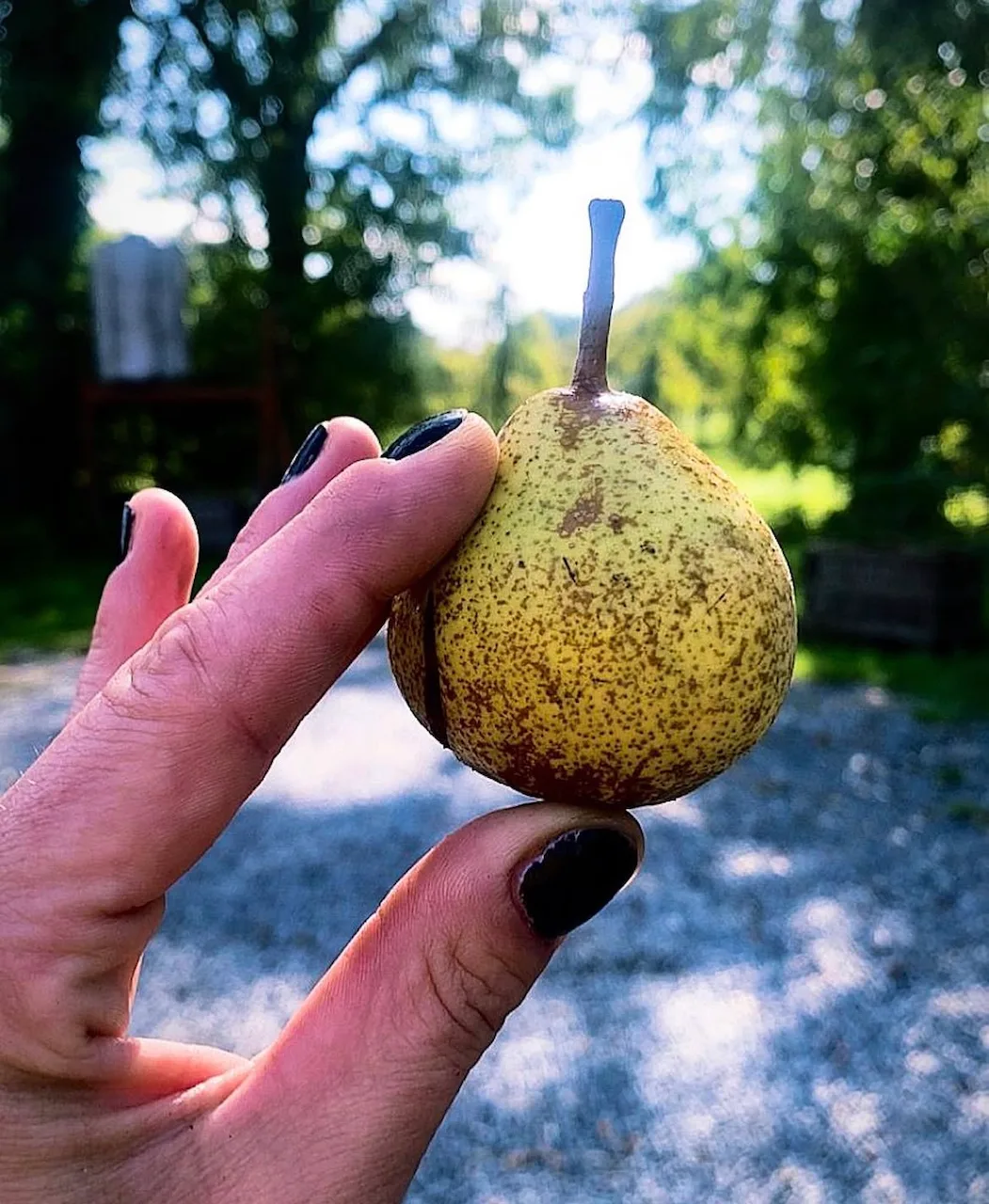
For a more gastronomic register, try our Abel, extra-dry perry. Eighteen months on the lees, a fine bubble, a length that stands up to meatier oysters, like well-finished rock oysters.
For a platter that mixes oysters with other shellfish, try Le Brut. It offers more breadth on the palate, at 5.5% vol, without losing the dryness this kind of dish needs.
To compare the whole range, our guide to choosing a cuvée covers the estate’s four families and their respective occasions. All twelve cuvées share the same base: organic, wild-yeast fermentation, no added sulfites.