
Carbon project no. 3
Insulating the cellar with straw
Why keep it cool
Our ciders develop their sparkle in the bottle, naturally, with no added gas or dosage yeast. This process has one requirement: it has to be slow. For that, the storage cellar must stay cool all year round, between 12 and 15 degrees.
Keeping this temperature required cooling, and therefore electricity. Reducing this dependency became a project in its own right.
The choice of straw
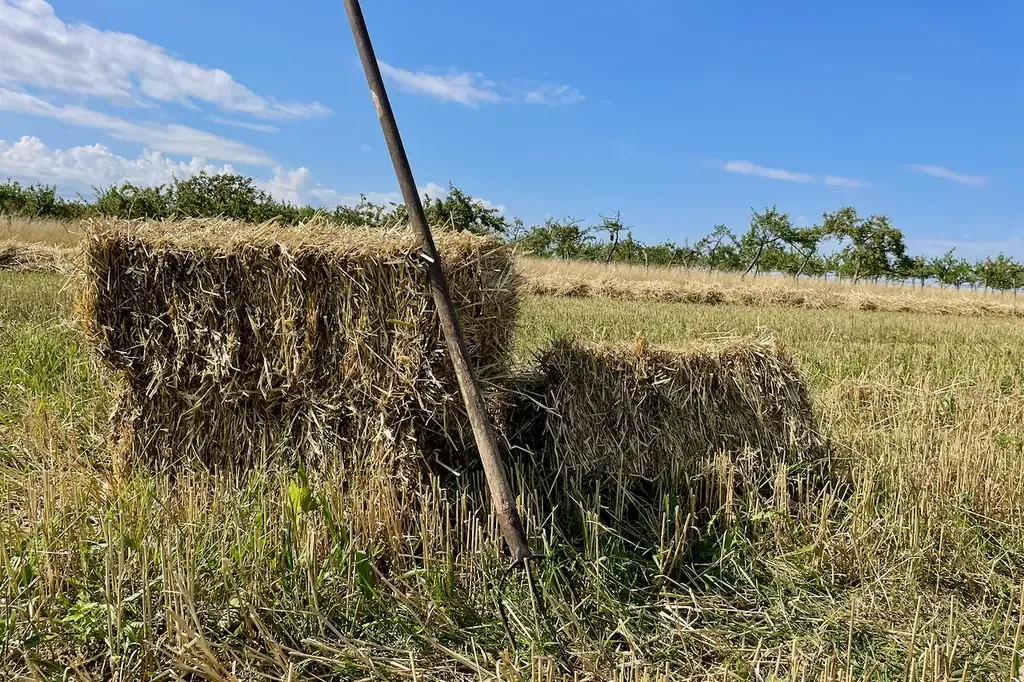
To insulate the storage building, we were looking for a material with two qualities: good insulating power, and a strong thermal lag. Thermal lag is the time it takes for outside heat to pass through a wall. The longer it is, the cooler the building stays in summer without air conditioning.
Straw meets both conditions. It's also a healthy, natural material, with no chemical treatment.
The shortest possible loop
We also wanted the shortest possible supply chain. In 2022, we sowed barley on our plots set aside for cereal crops.
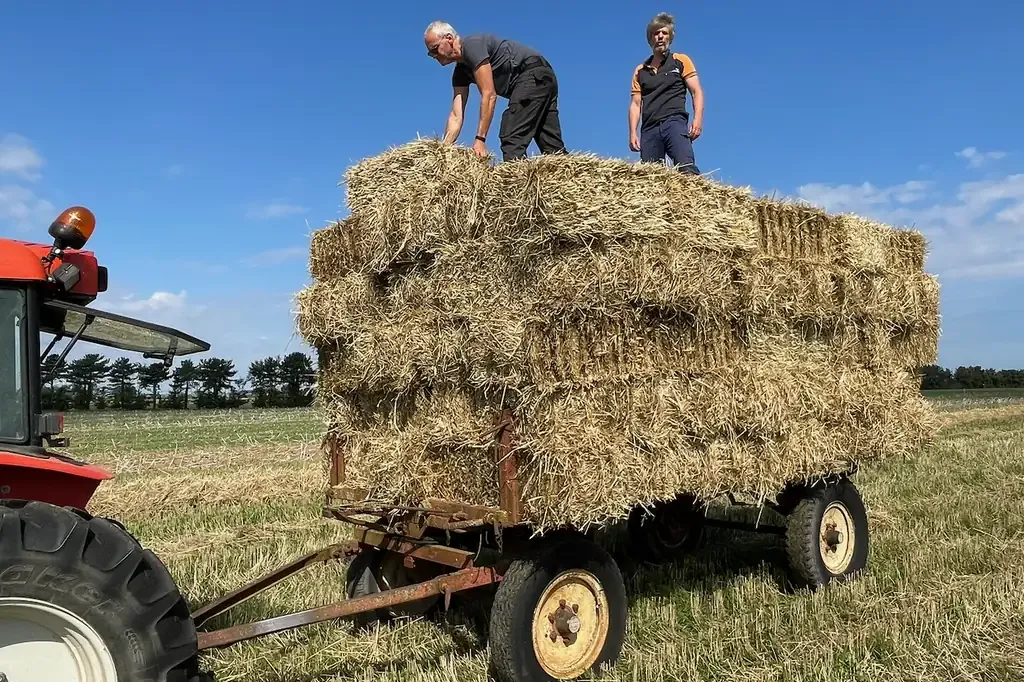
Once the barley was harvested, we produced our own straw bales, about a thousand of them. We placed them against the walls and roof of the storage building.
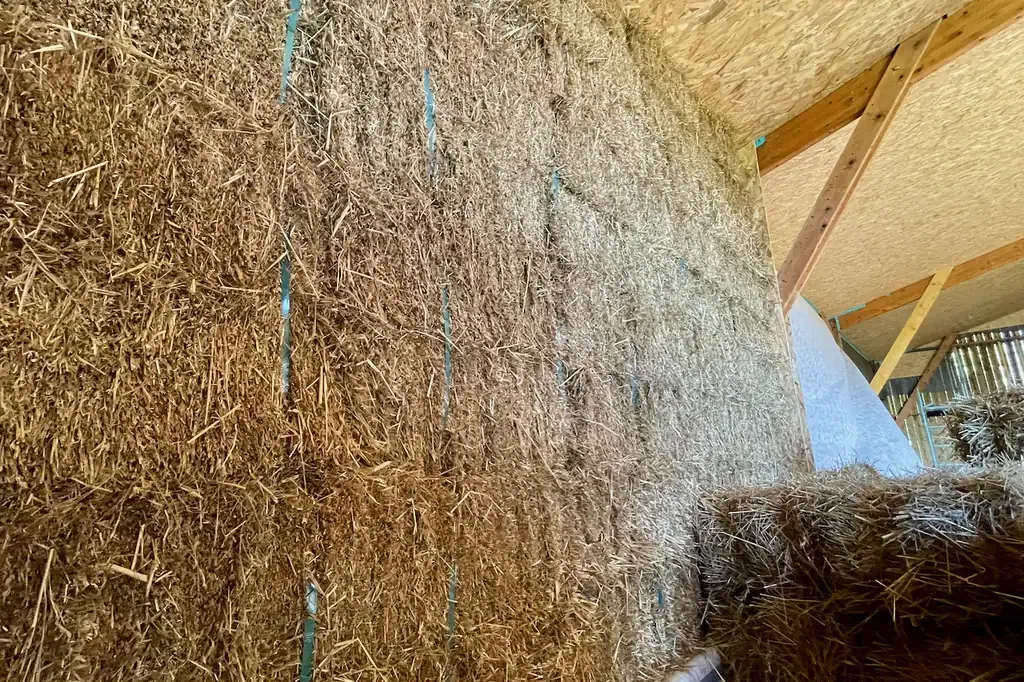
The insulation grew in the field next door. You can't get more local than that.
Result: a building three times better insulated than the standard, and a cooling requirement cut by 75%.