Carbon project no. 1
Moving beyond disposable glass: reusing our bottles
The finding
Our 2019 carbon footprint assessment delivered a clear verdict: 86% of a cider bottle's footprint comes from the glass itself. A bottle manufactured, filled, transported, opened, then thrown away. All the energy of its manufacture, lost for a single use.
Reducing this footprint came down to a simple question: what if the bottle were used again, instead of ending up in recycling after a single use?
An idea already in our DNA
Reuse isn't new at Cinq Autels. In the 1990s, Jean-René Pitrou had already tried the experiment. He put a deposit on the bottles: customers who brought them back got part of the price refunded.
The instinct was right, but the economics didn't add up. At the scale of a single estate, collecting, sorting and washing cost more than it brought in. The experiment stopped. The idea stayed.
Reviving it, at the right scale
Thirty years on, the context has changed. A network of industrial bottle washers is taking shape in France, able to wash bottles in large numbers. But everyone still needs to speak the same language.
We reached out to the Vrac et Réemploi network to select a standard bottle, a format recognised and accepted by every bottle washer in France. A bottle that can be collected, washed and refilled again, anywhere in the country.
The detail that changes everything: the label
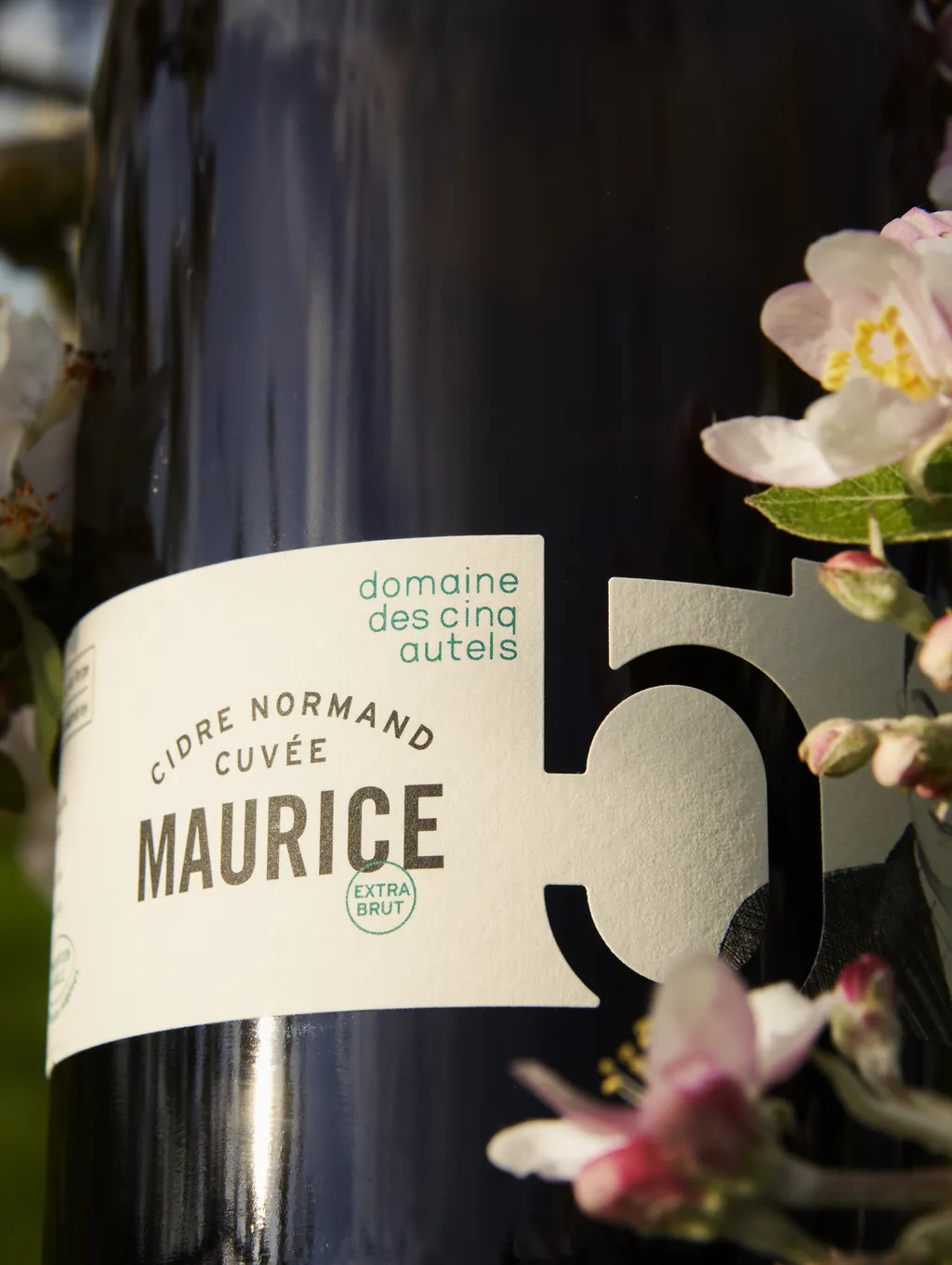
A reusable bottle has to come clean without leaving a trace. A standard label survives the wash and jams the whole chain.
So we reworked ours: an adhesive paper with a wash-off glue, designed to peel away cleanly in industrial washing machines. Without this detail, no bottle goes back into circulation.
Since 2025, 100% of the bottles we produce are reusable. We've become a producer of reusable bottles.
The missing link: where to buy washed bottles?
Producing reusable bottles is one thing. Sourcing them is another. Buying bottles that are already washed and ready to fill is still complicated: supply is scattered, washers and producers barely know each other, and stock doesn't move around much.
This complexity gave Thibault Pitrou an idea: create the missing link. A platform that connects washers, who have stocks of clean bottles to move, with producers, who are looking to buy them. This network is called Les Bouteilleurs.
What started as an internal need for the estate has become a tool open to the whole industry. A reused bottle isn't just good for Cinq Autels: it's good for every producer looking to move beyond disposable glass.