Carbon project no. 2
Turning the estate into a carbon sink
Renewing the orchard
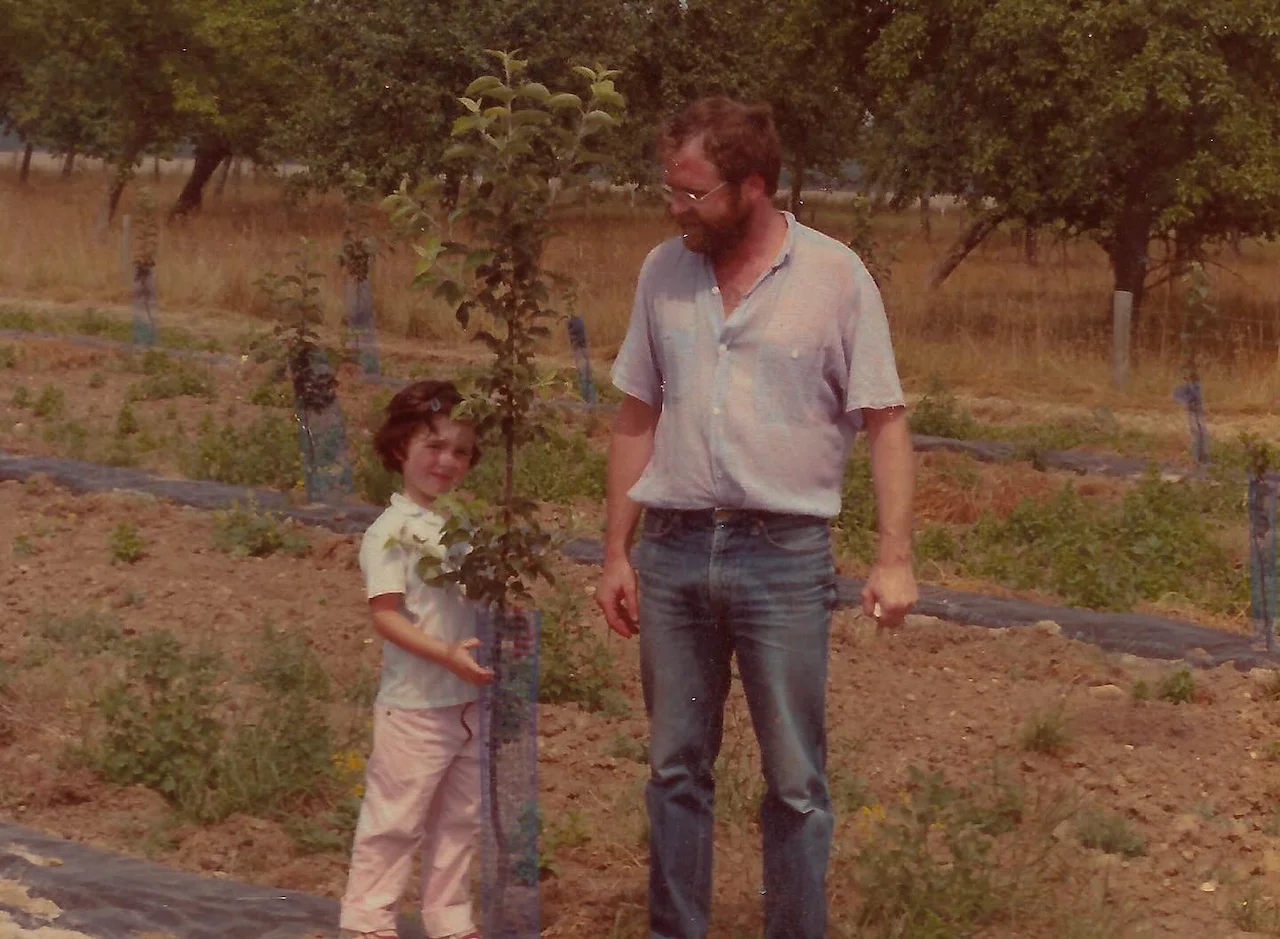
Jean-René planted the first low-stem apple trees in 1984. Forty years later, these trees are reaching the end of their productive life. That's the normal lifespan: a low-stem apple tree yields well for forty years. Past that point, output drops. It's time to renew.
But we haven't uprooted these trees. They've been standing for forty years, their wood stores carbon, their leaves still carry out photosynthesis. We've put them out to pasture: they no longer produce apples, but they're still at work sequestering CO₂.
The 9,000 new trees were planted on separate plots, both low-stem and standard-stem. That's 13 additional hectares of orchard, not a replacement. So the estate captures carbon on two fronts: the old trees still standing, and the young ones in full growth, each fixing between 20 and 25 kg of CO₂ a year.
Alongside these apple trees, a 2.6 km hedgerow has been planted along the edges and between the plots. It shelters beneficial wildlife, structures the soil, and completes the estate's plant network.
Why heritage varieties?
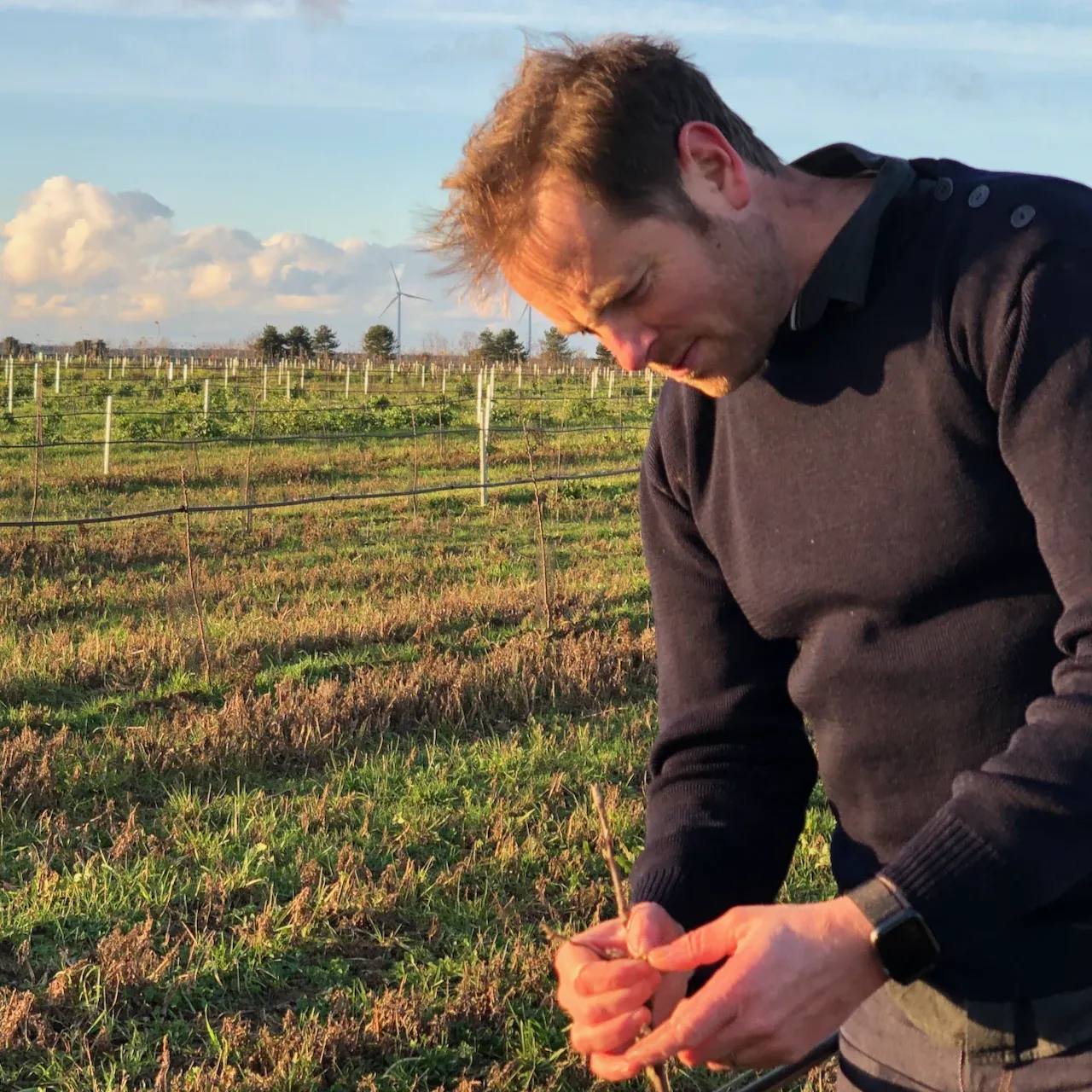
Renewing the orchard also meant choosing what to replant. We kept heritage cider apple varieties. This choice isn't just about taste.
These varieties have stood the test of time because they resist. Scab, canker, pests: they hold up better than modern varieties bred for yield. This hardiness is exactly what organic farming needs, where synthetic inputs aren't used. A robust apple needs fewer interventions.
We work with varieties like Doux Veret de Carrouges, Bedan, Douce Moën and Petit Jaune. Each brings its own part: bitterness, sugar, acidity, tannin. It's their blend that gives our cuvées their balance.
We went further. On one hectare, we planted a standard-stem orchard with very old varieties, some of them now rare. The goal isn't yield, but conservation. Each tree keeps alive a genetic heritage that might otherwise have disappeared.
An orchard that captures carbon
A young tree grows, and to grow, it captures carbon. This growth phase lasts more than ten years. Throughout this period, each tree fixes CO₂ in its wood, its roots and the soil around it.
Estimates vary depending on age, variety and management, but on average it's in the range of 20 to 25 kg of CO₂ per tree per year during growth. Across more than 9,000 still-young trees, the orchard is gradually becoming a carbon sink.
This is our main lever for giving back more carbon to the earth than the estate releases. The orchard doesn't just produce apples: it contributes to the estate's carbon balance.
The soil is working too
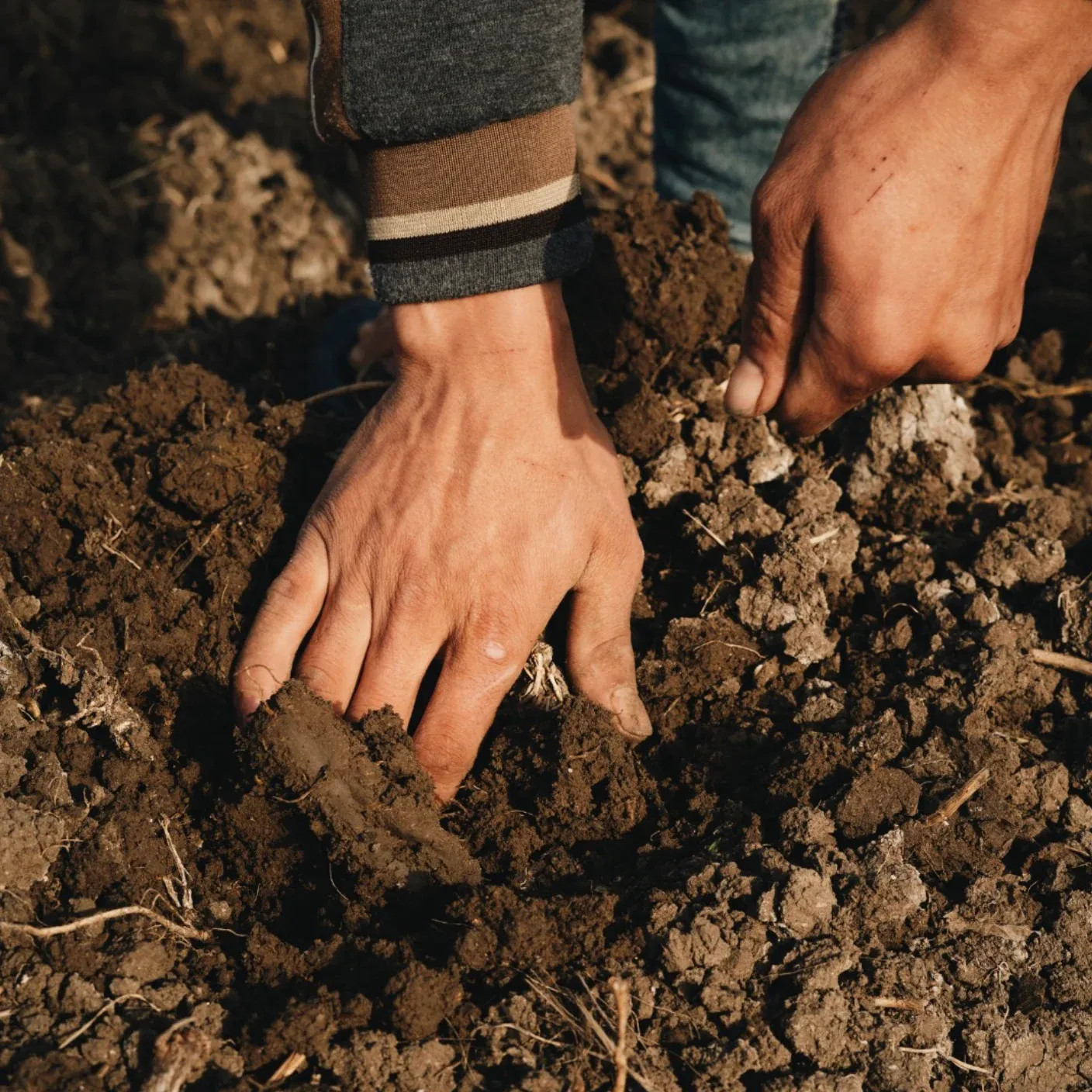
We think of the carbon stored in the wood of the trees. We forget the soil. Yet that's where another part of the story happens.
Under an orchard, the soil is never bare. A permanent plant cover covers it all year round, between the rows and at the foot of the trees. These plants capture carbon and pass it into the ground through their roots. The soil builds up organic matter, season after season.
Organic farming keeps this mechanism running. Without synthetic fertiliser or pesticides, the soil's microbial life stays intact. Fungi, bacteria and earthworms transform matter, stabilise it, store it. A living soil retains carbon far better than a depleted one.
So the orchard captures carbon twice over: through its trees, and through the soil that supports them.