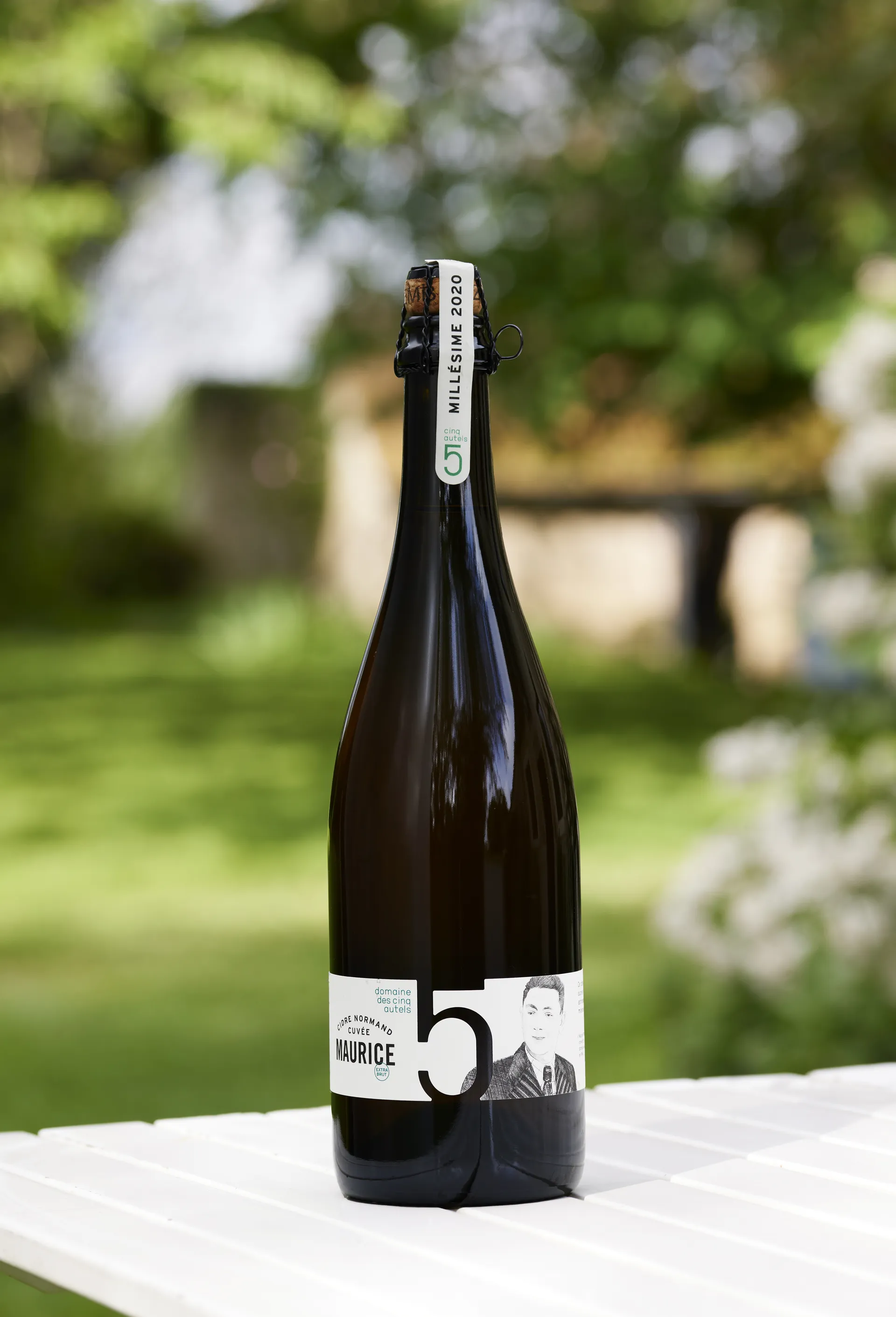

With a runny camembert, you need a medium-dry cider, round and fruity. Its measured sweetness matches the creaminess of the paste without overwhelming it, and its fine bubble lightens every bite. Our Cuvée Claude (4.5% vol, organic, no added sulfites) brings these qualities together in a blend of sweet and bittersweet varieties from the estate. Here’s why the pairing works, and how to serve it.
Why medium-dry cider works with a runny camembert
Camembert ripens from the outside in. Once it turns runny, the paste concentrates the fat and the stronger character of the bloomy rind. A cider that’s too dry snags on the bitterness, one that’s too sweet drowns it in syrup. The Cuvée Claude brings the balance instead.
Controlled fermentation leaves some of the apple’s natural sugar on the palate, with no sugar added. The blend brings together sweet and bittersweet varieties, grown on clay-limestone soil along the Muance river. It gives a fruity roundness that extends the cheese’s creaminess, rather than fighting it.
The mousse, fine and persistent, does the rest of the work. It rinses the palate between bites, the way it would with an even richer paste, like raclette. Its nose of roasted apple and honey meets the camembert’s rind without ever masking it.
The estate’s cuvée for this camembert
The Cuvée Claude is a tribute to Claude Pitrou, the estate’s third generation. Its fermentation is carried by the cellar’s wild yeasts alone, built up over decades, which sign the estate’s own aromatic character. Deep golden-yellow colour, fine mousse, nose of roasted apple, acacia honey and orange blossom. On the palate, this full, round profile matches the texture of the cheese without ever overpowering it.
Camembert de Normandie, AOP-protected since 1983, is still hand-ladled from raw milk, in five successive pours. Two Norman farmhouse traditions, one dairy, one cider, that have always met at the table.
Serving
Serve this cider between 8 and 10°C, a touch warmer than an extra-dry, so its roundness doesn’t seize up. A traditional Norman cider glass is enough. Open the bottle when you sit down to eat, and keep the rest upright, away from light.
Serve the camembert at the end of the meal, before dessert, as is the Norman custom. Take it out of the fridge a good half hour before serving. A paste that’s too cold masks its creaminess, and with it the point of the pairing.
If you’d rather try something else
For a well-ripened paste with a stronger flavour, a drier profile is the better call. The Cuvée Jean-René, a dry cider with a taut structure and a minty freshness, cuts through a pronounced cheese where a round cider would get overwhelmed. It’s the pairing many Norman cheesemongers keep for a well-aged camembert.
On a baked camembert, with a drizzle of honey or a touch of onion jam, the Cuvée Claude stays the right call: its generous fruitiness extends the sweet-and-savoury notes.
Our guide to choosing a cuvée covers the range’s four families. Another cheese pairing lives on the crêperie side, in what cider to serve with a galette complète. The logic there runs the other way: a drier profile, set against egg and ham.